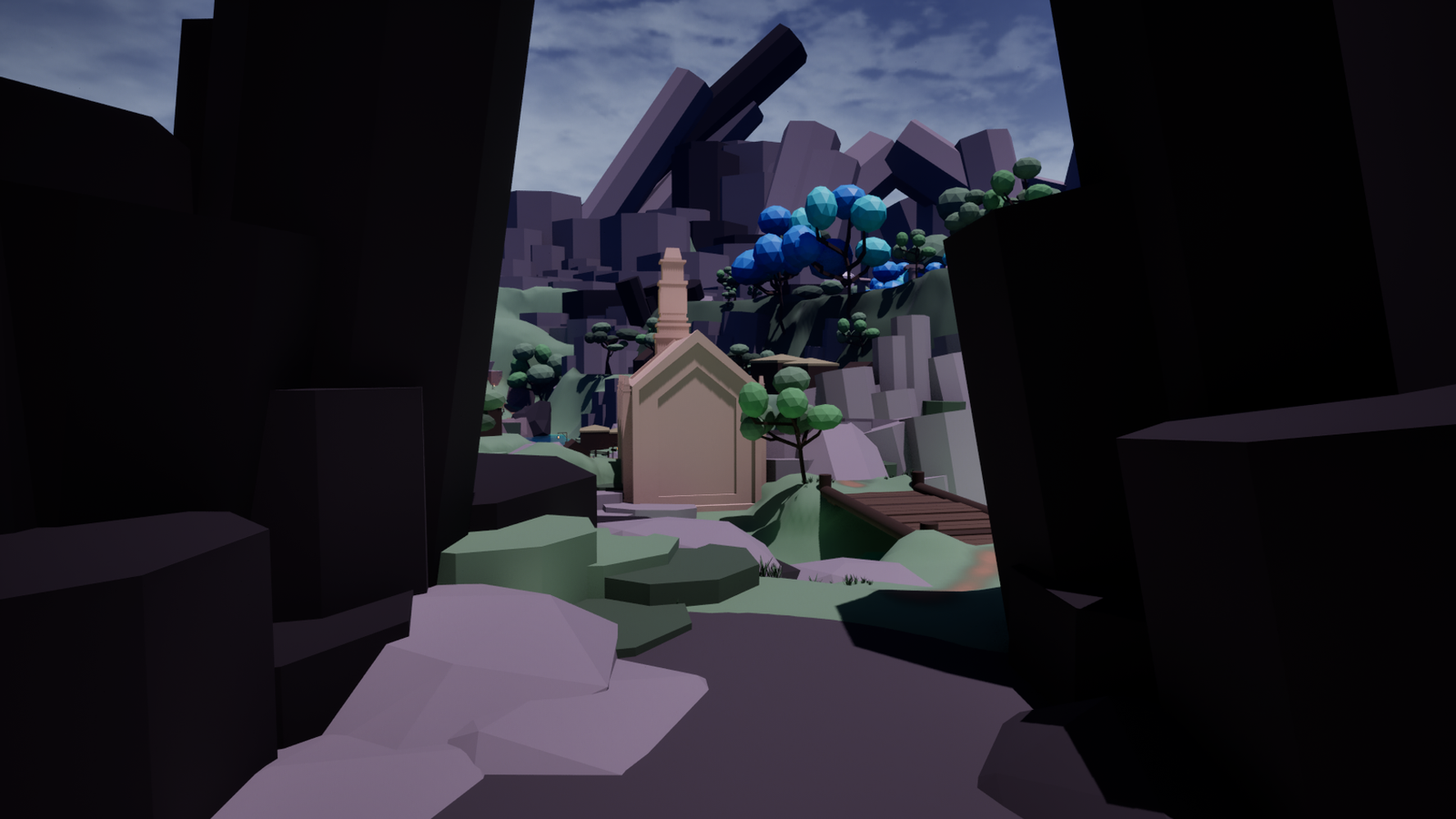
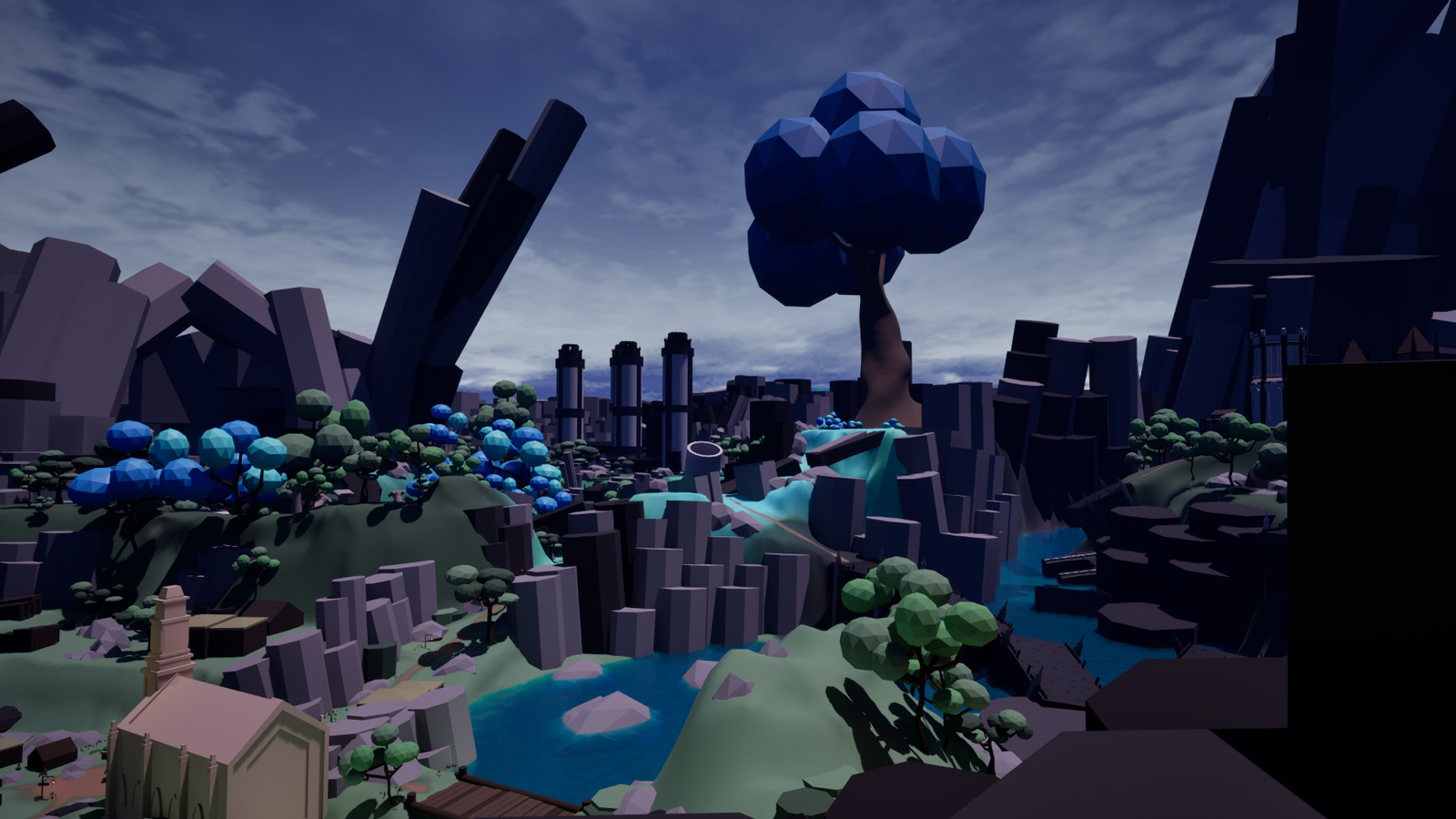
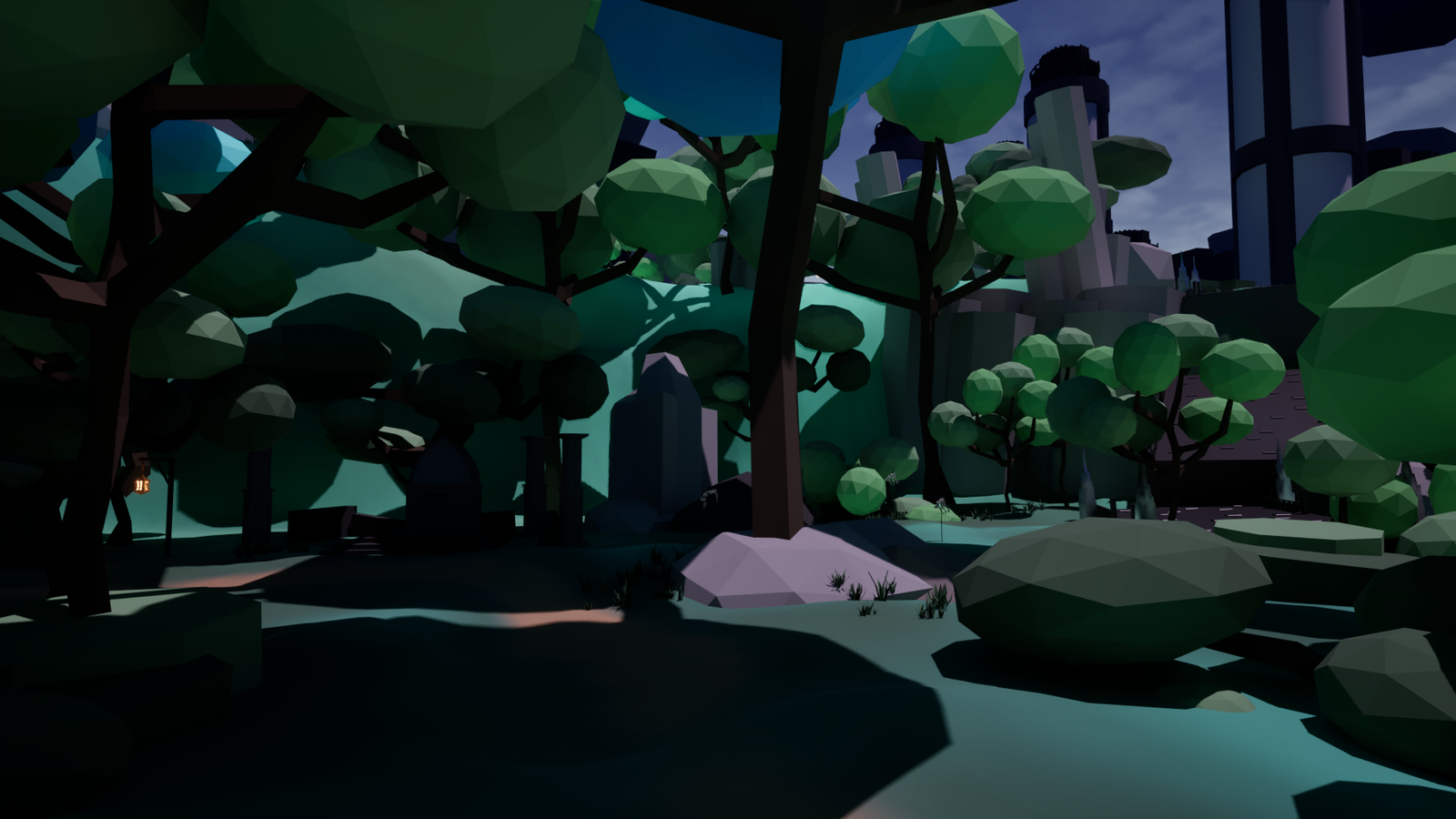
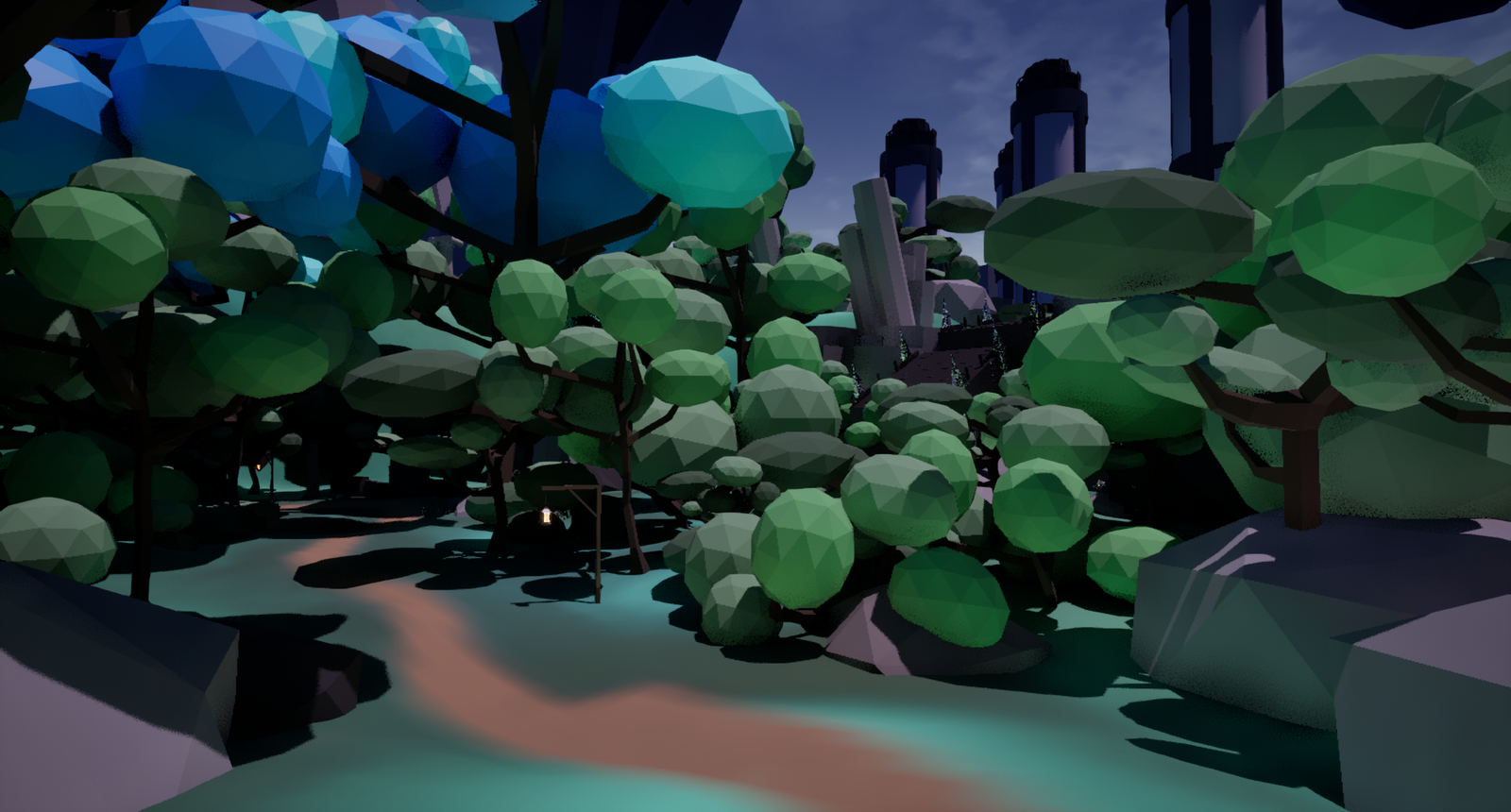
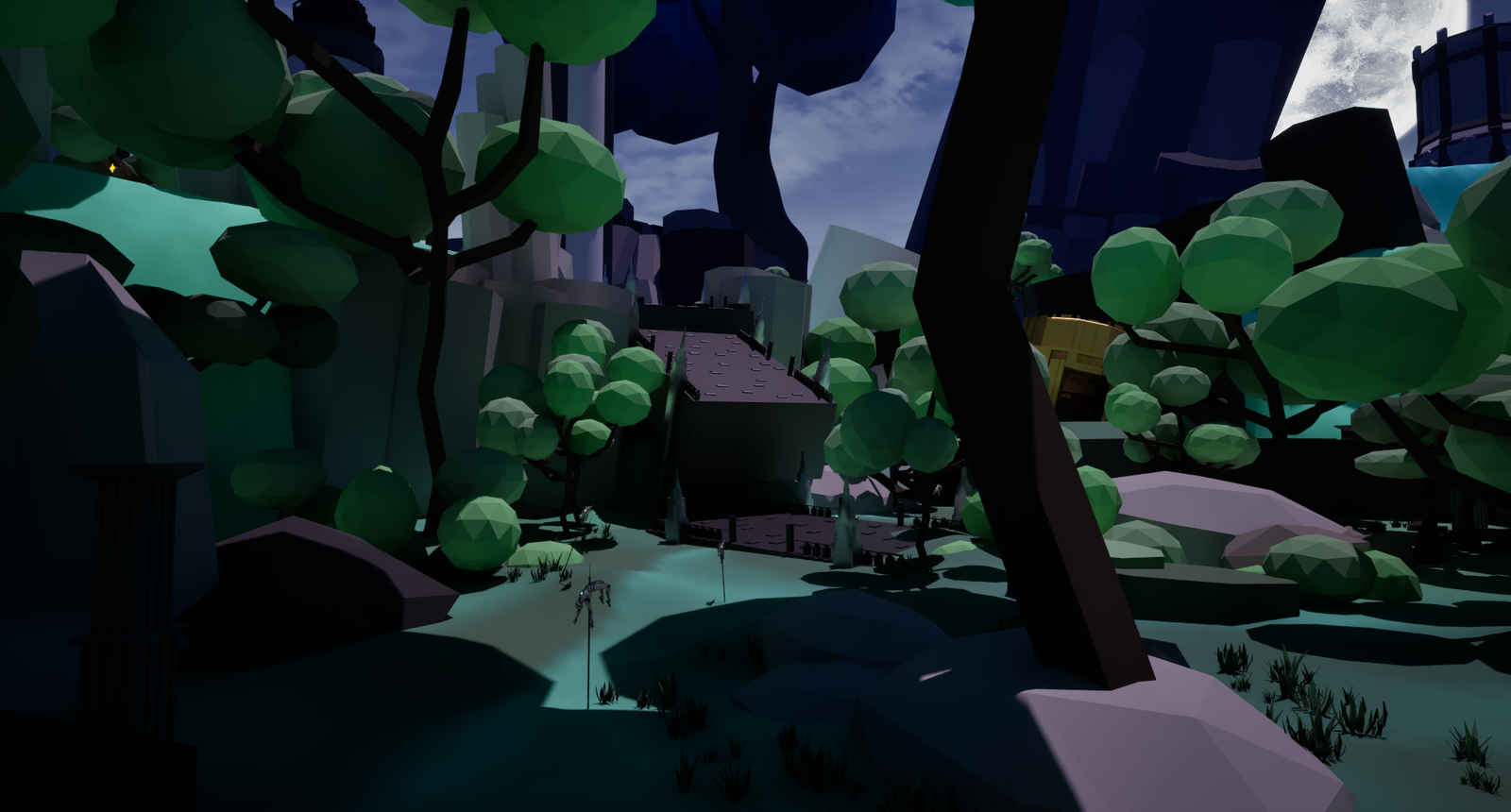
I set out to create a captivating and visually appealing fantasy open world. I put an emphasis on player exploration and guided the player through a combination of findability and discoverability.
I aim to keep the player’s interest piqued by creating multiple biomes with different points of interest to explore.
PROJECT DETAILS
Developed over 6 weeks, half time
Engine: Unreal Engine 5
Souls-like template created by me
Meshes and materials created by me
OBJECTIVES
Souls-like open world design with a focus on exploration
Varied biome design
Guiding through findability and discoverabilty
Worldbuilding and sense of scale
INSPIRATION
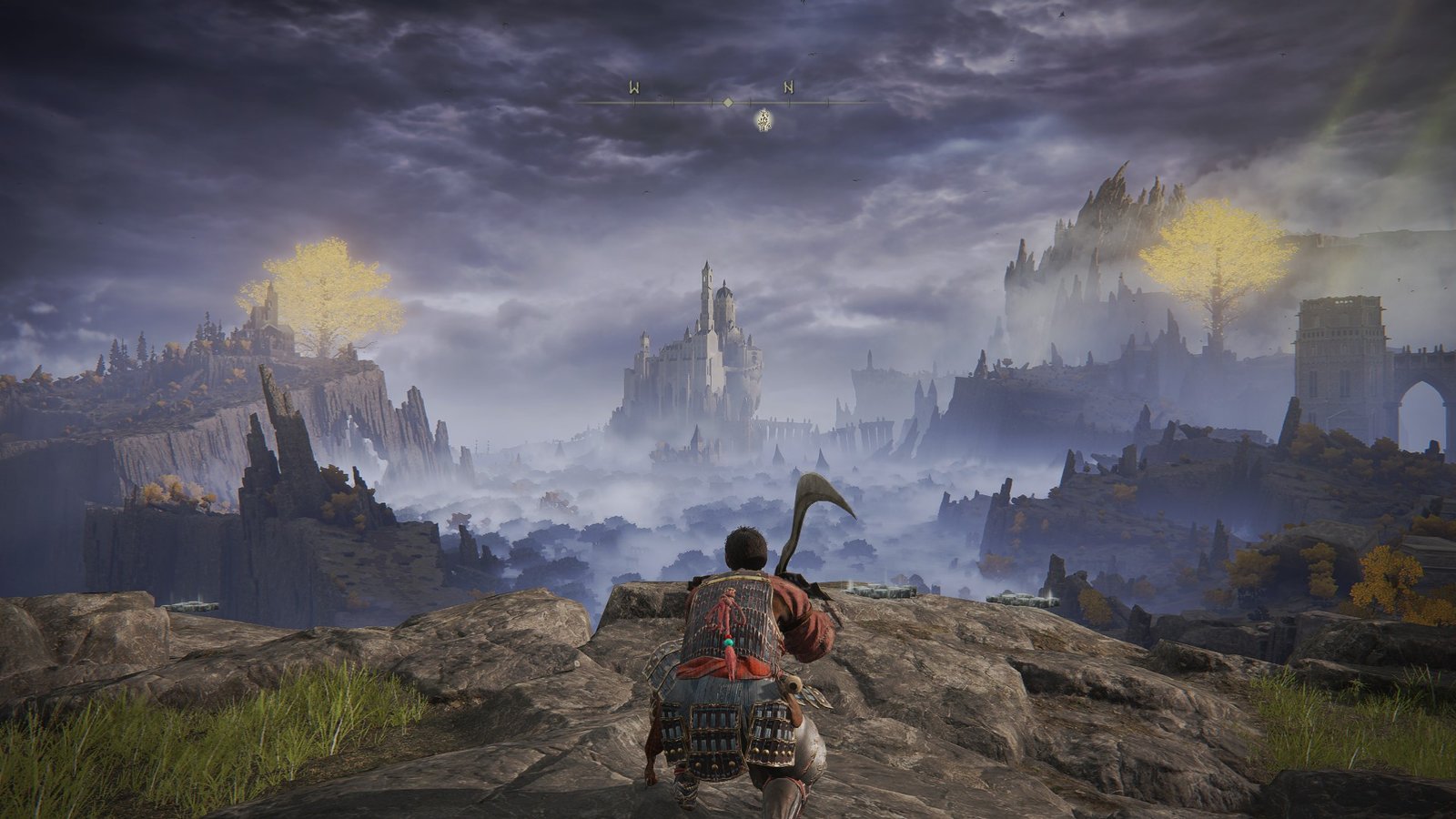
My primary source of inspiration was Elden Ring. Remembering the feeling of adventure and excitement I got while playing that game for the first time I was inspired to create a similar experience from scratch.
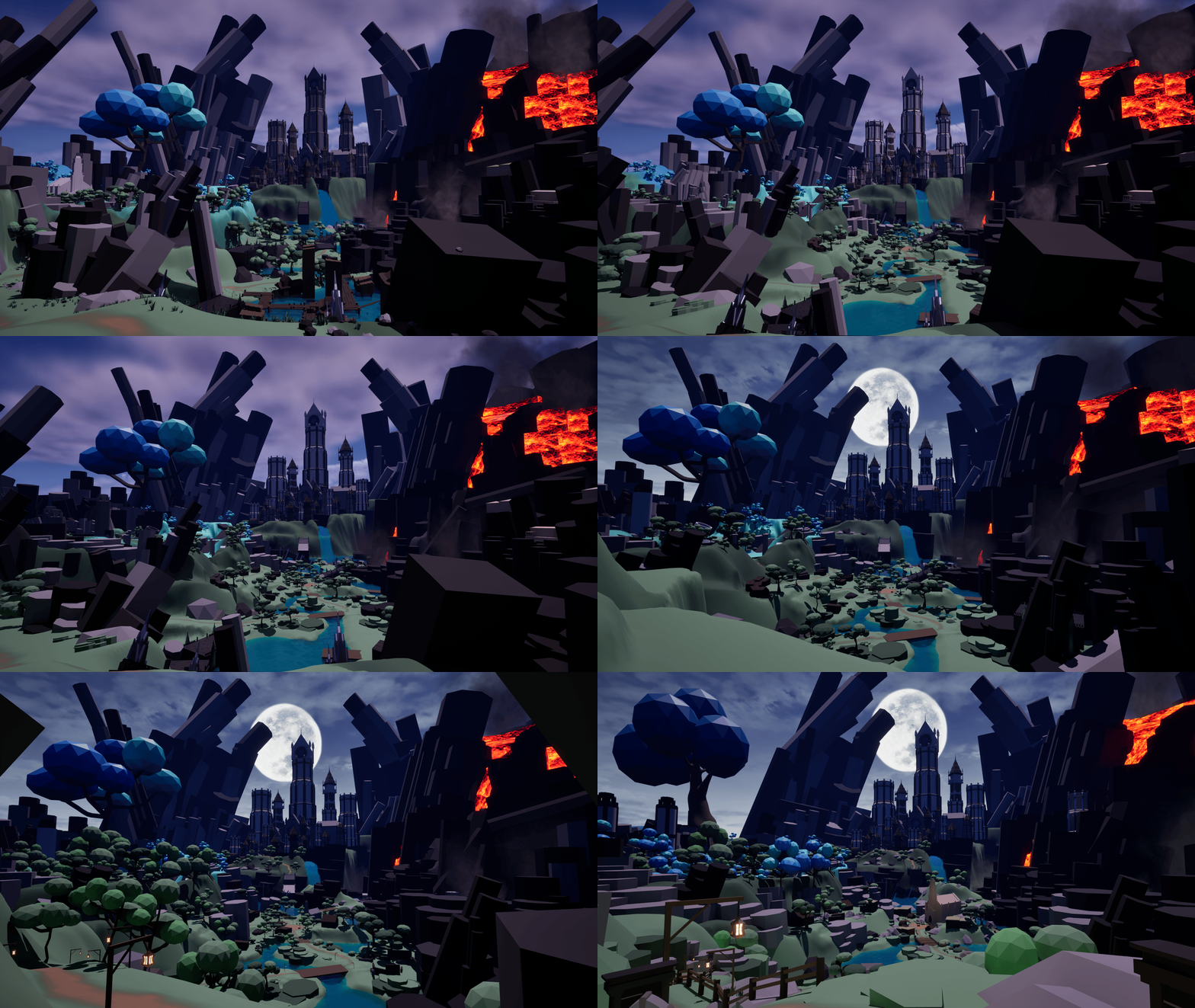
Elden Ring has a major focus on rewarding vistas, pleasing world composition and giving the player free rein to explore any part of the world. I chose to greatly accentuate these aspects in my level.
Another important design philosophy I took from the reference game was that if something looks like it can be reached, it should be reachable. As such almost every area that is visible in my level can be reached somehow.
LEVEL OVERVIEW
THE OVERWORLD
The Flooded Valley
The Sapphire Hills
Mount Acropolis
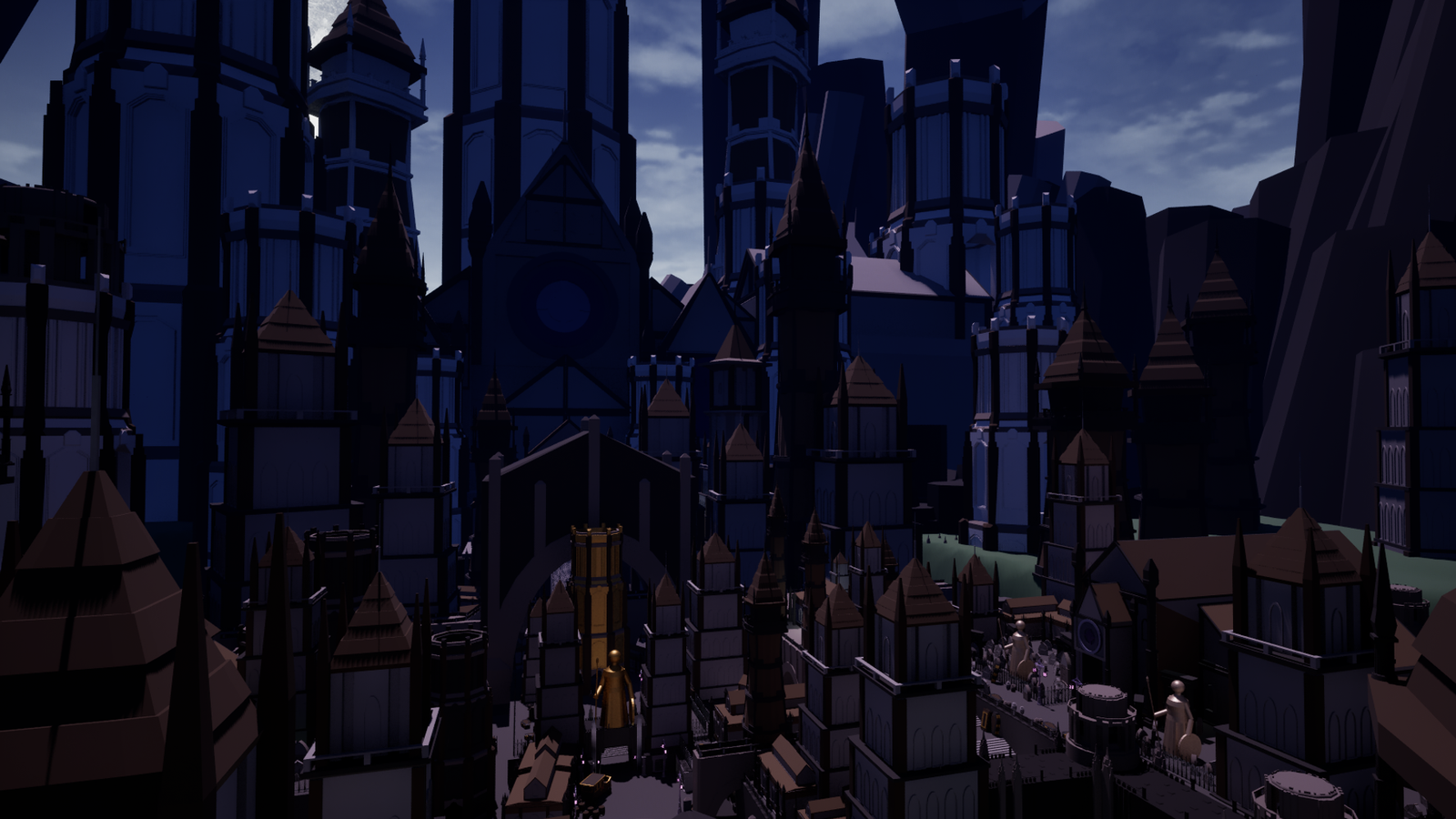
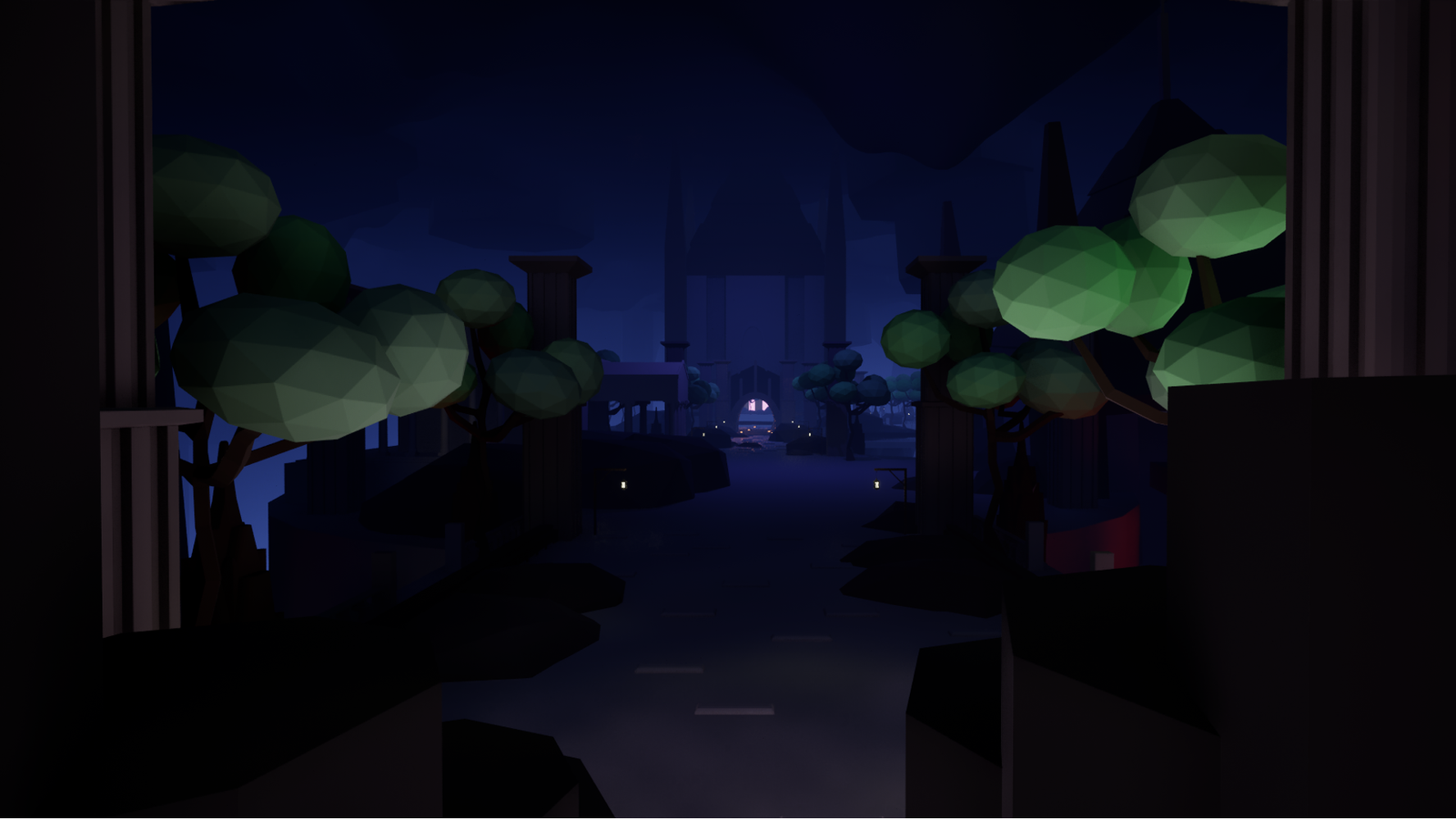
The Capital
THE BIOMES
In order to create an intriguing world I felt like varied biomes and areas with distinct traits was important. Early on I decided that I wanted at least 5 different environments for the player to traverse in order to avoid visual fatigue.
I also did this to make the player look forward to reaching the areas visible from the various vistas throughout the level and give them a sense of progression when going through an area.
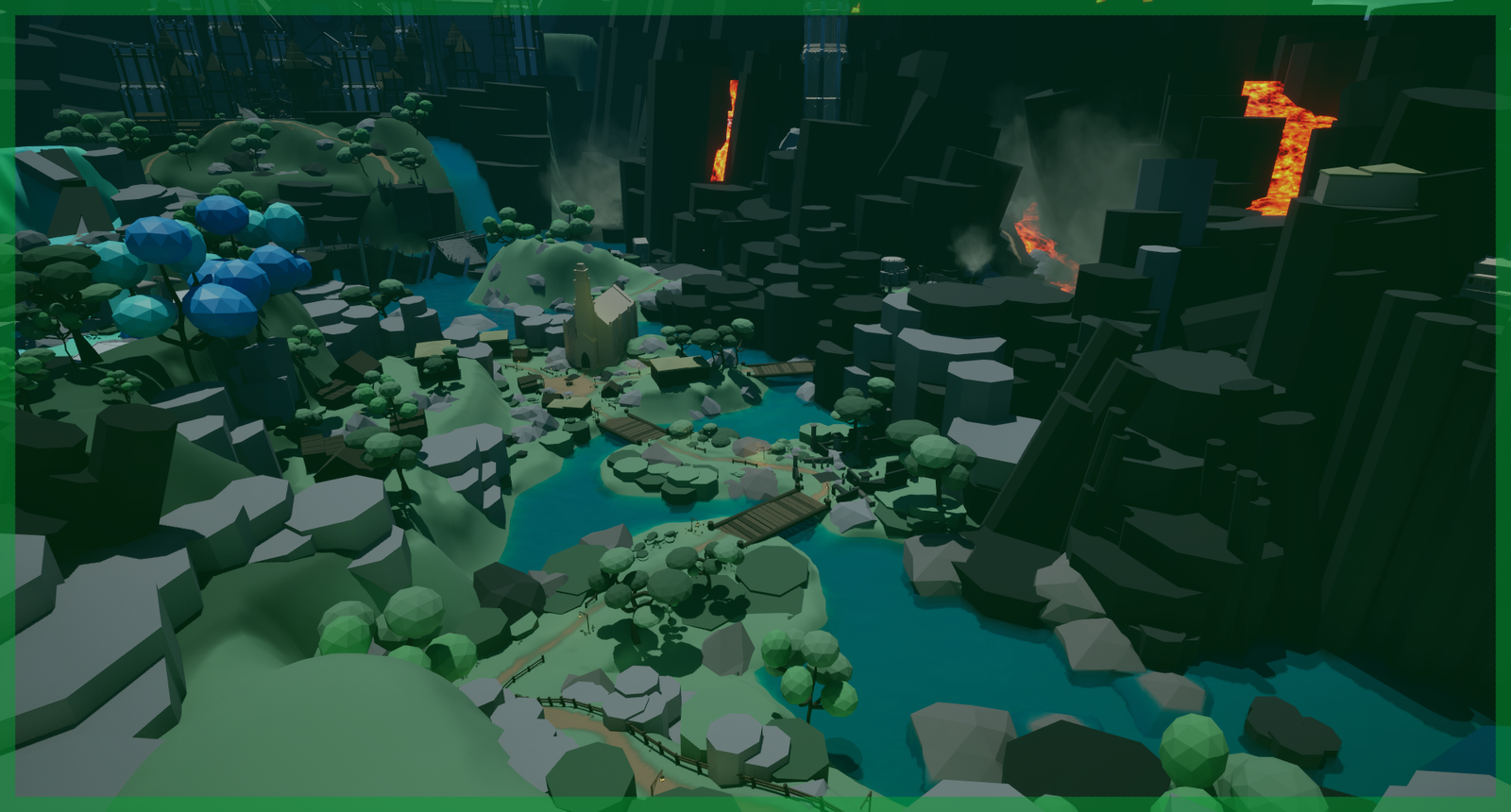
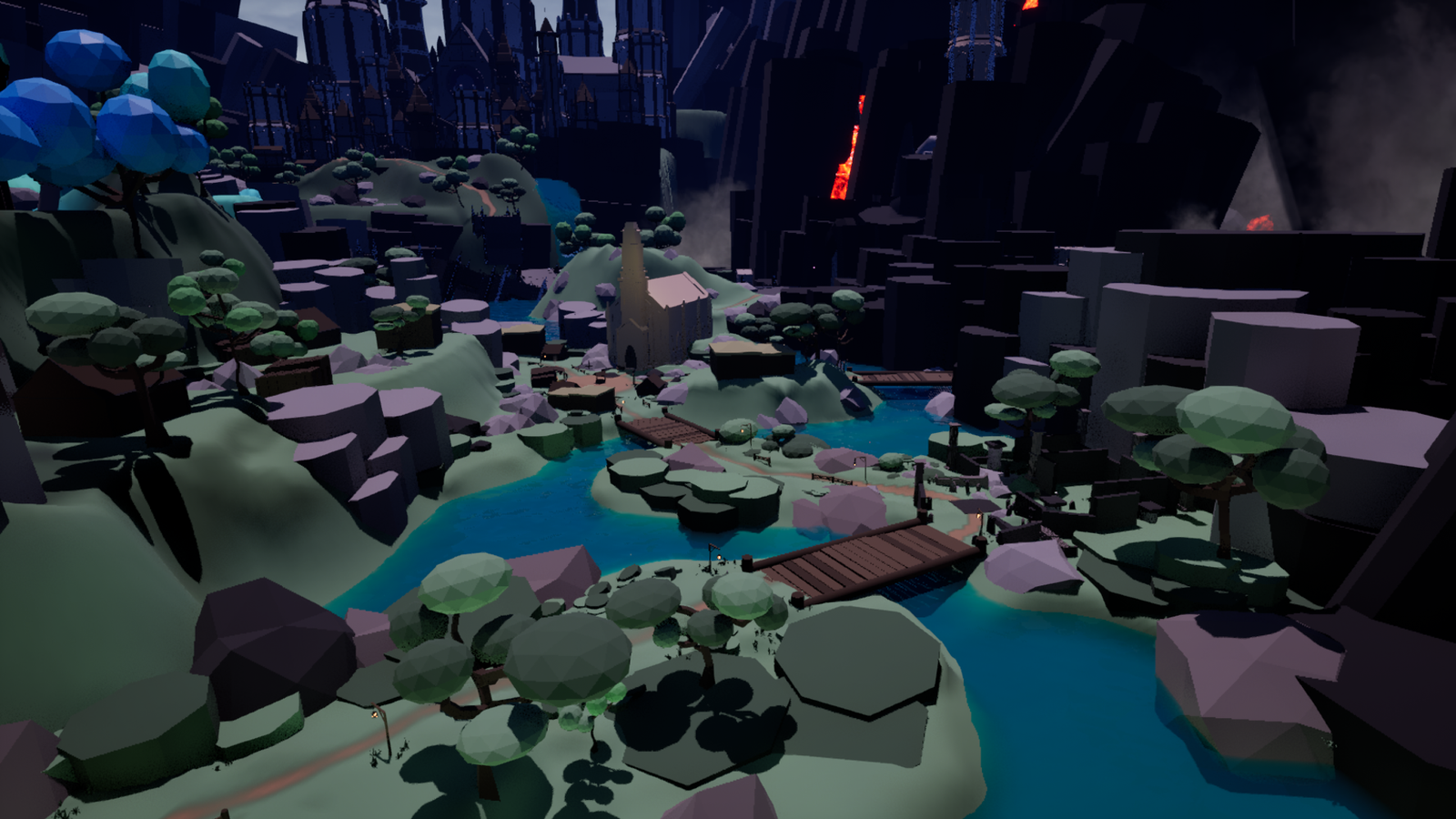
THE FLOODED VALLEY
This is the first biome the player encounters and it acts as an introduction to the world and the gameplay.
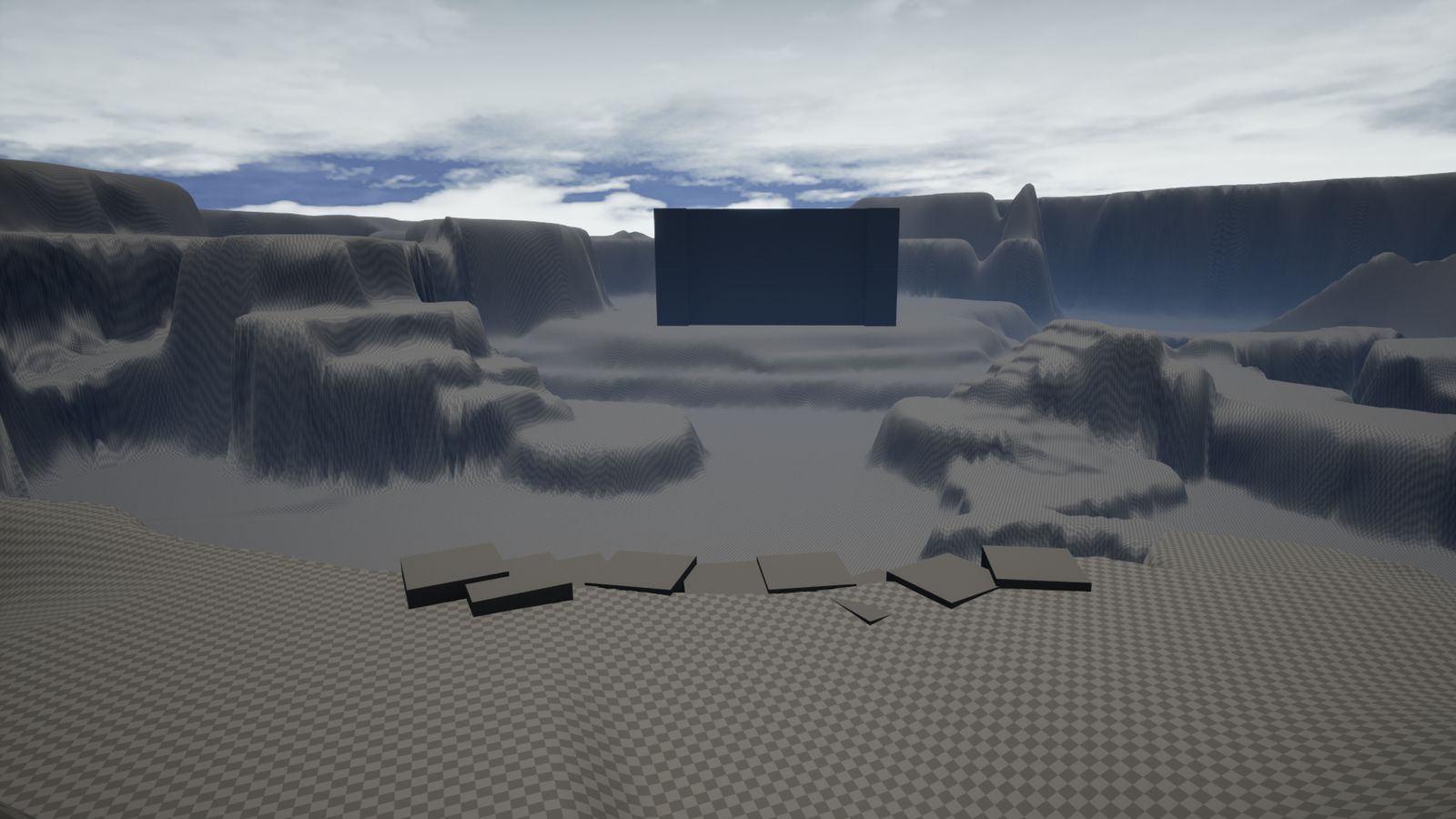
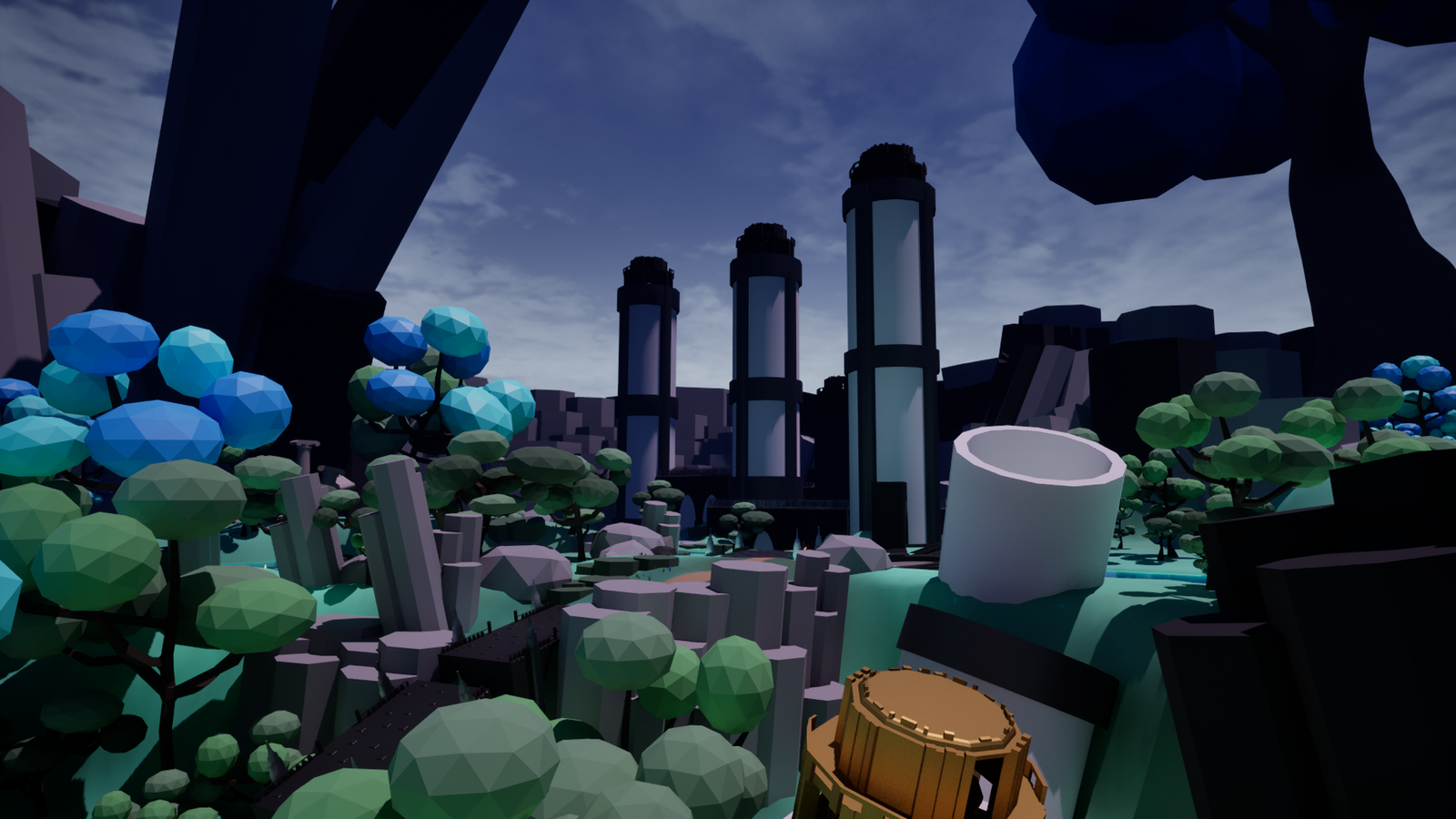
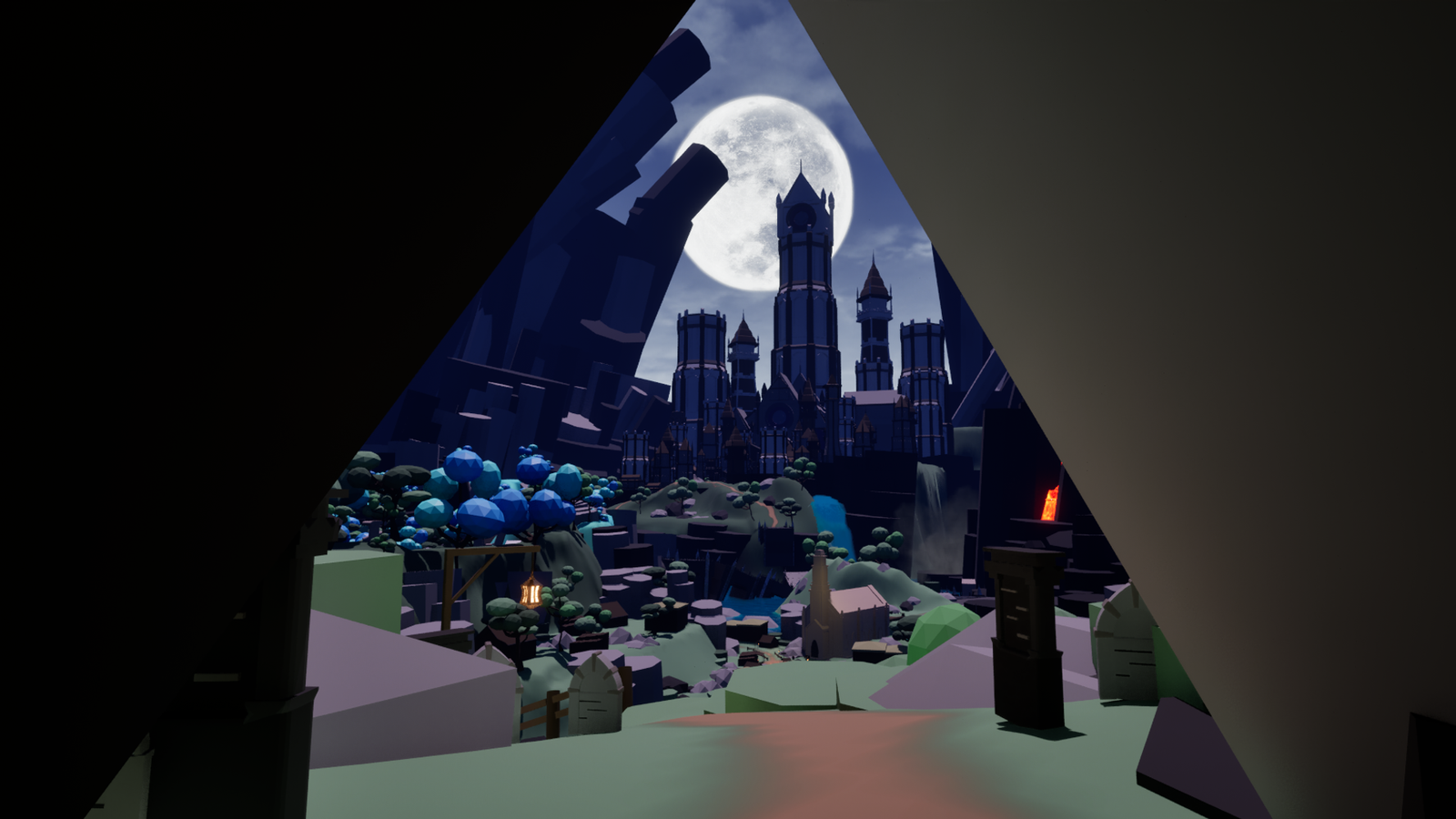
The player first walks out of a cave and gets to a vantage point where they can see almost all of the overworld. After this the player is introduced to the combat mechanics and the hub area.
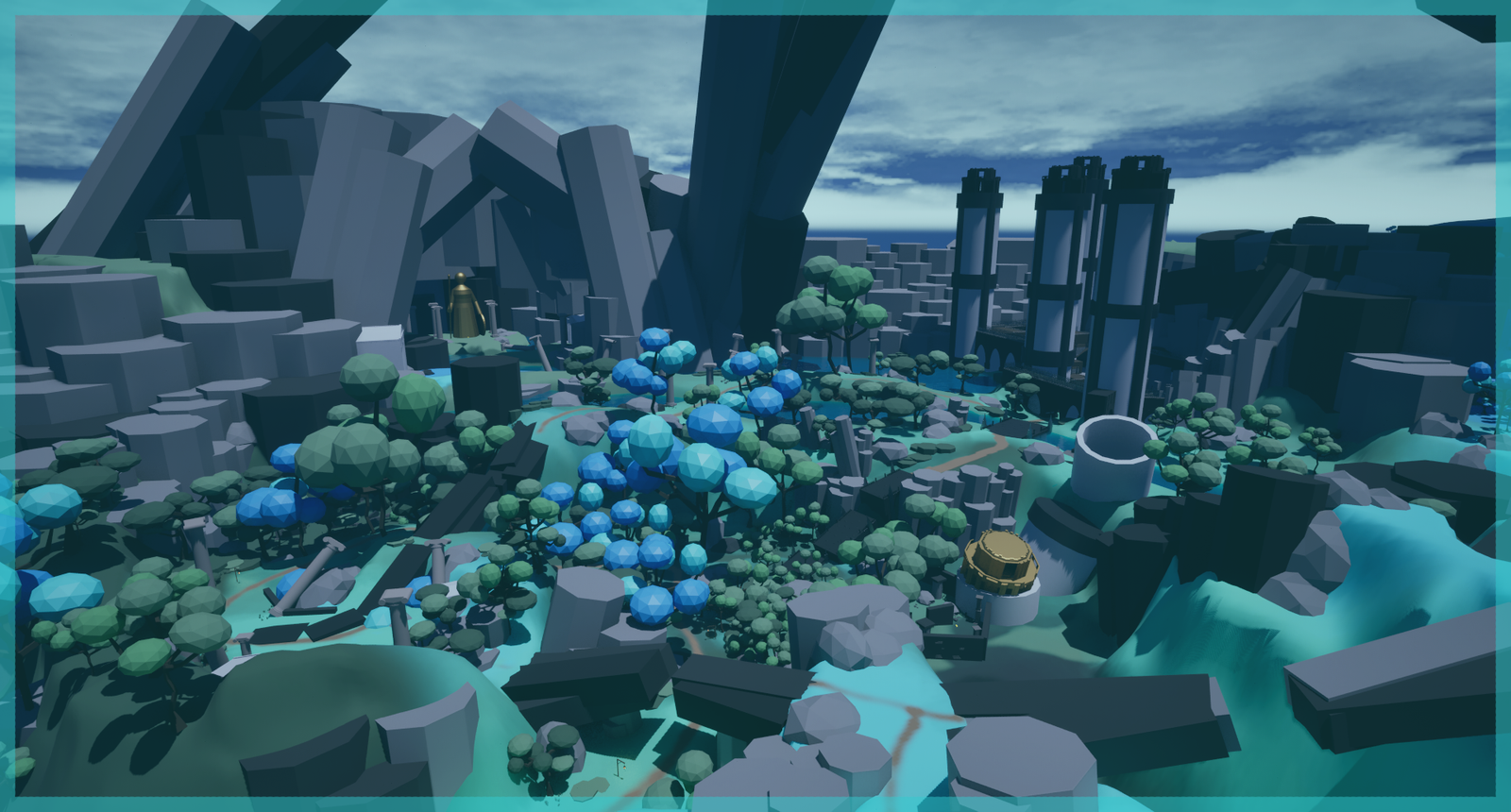
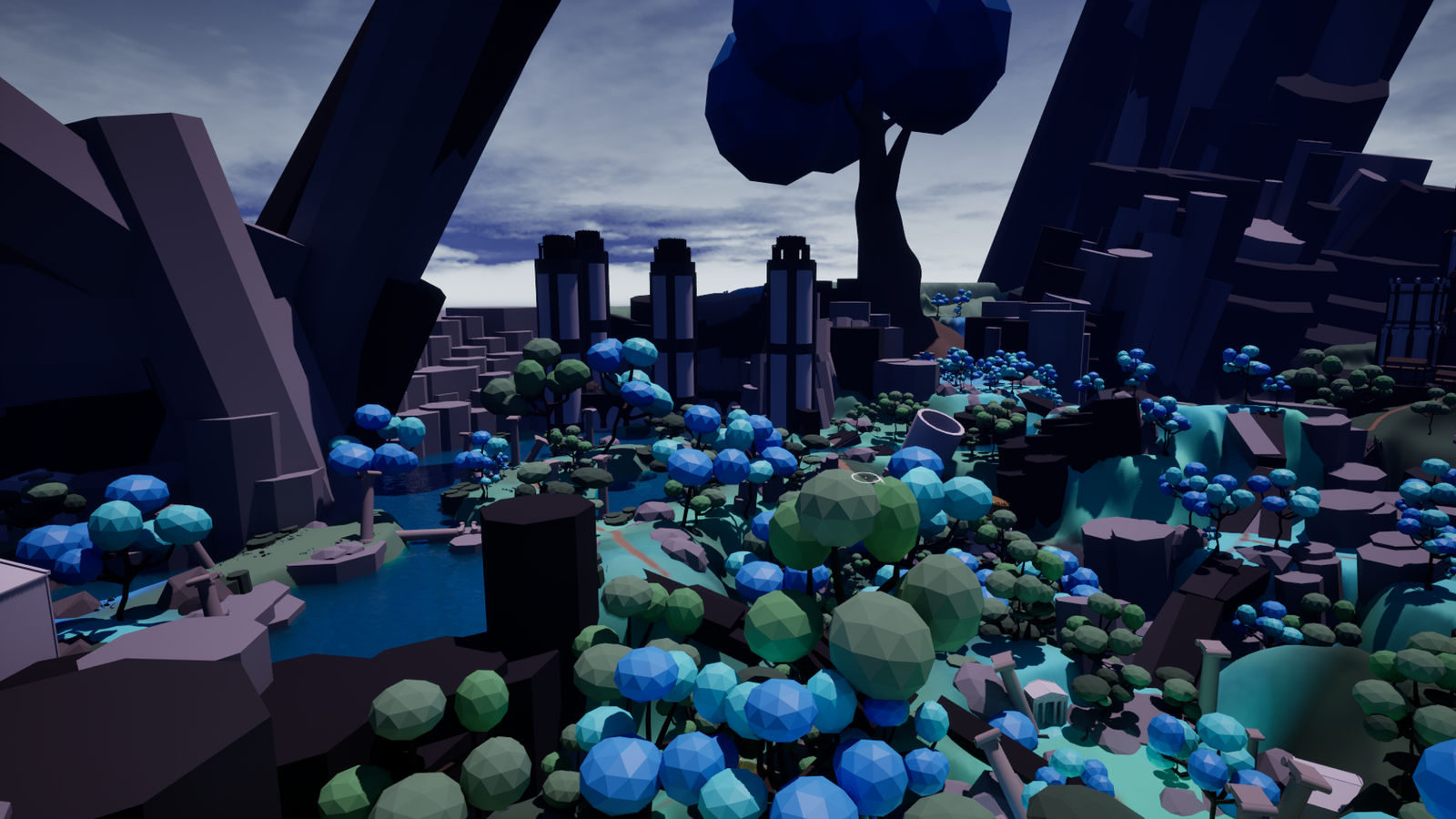
THE SAPPHIRE HILLS
This area is easily distinguishable through its unique color. The player can go here to take down a powerful enemy and claim a strong weapon upgrade after visiting the hub.
There are more enemies here and it is more challenging than the previous area.
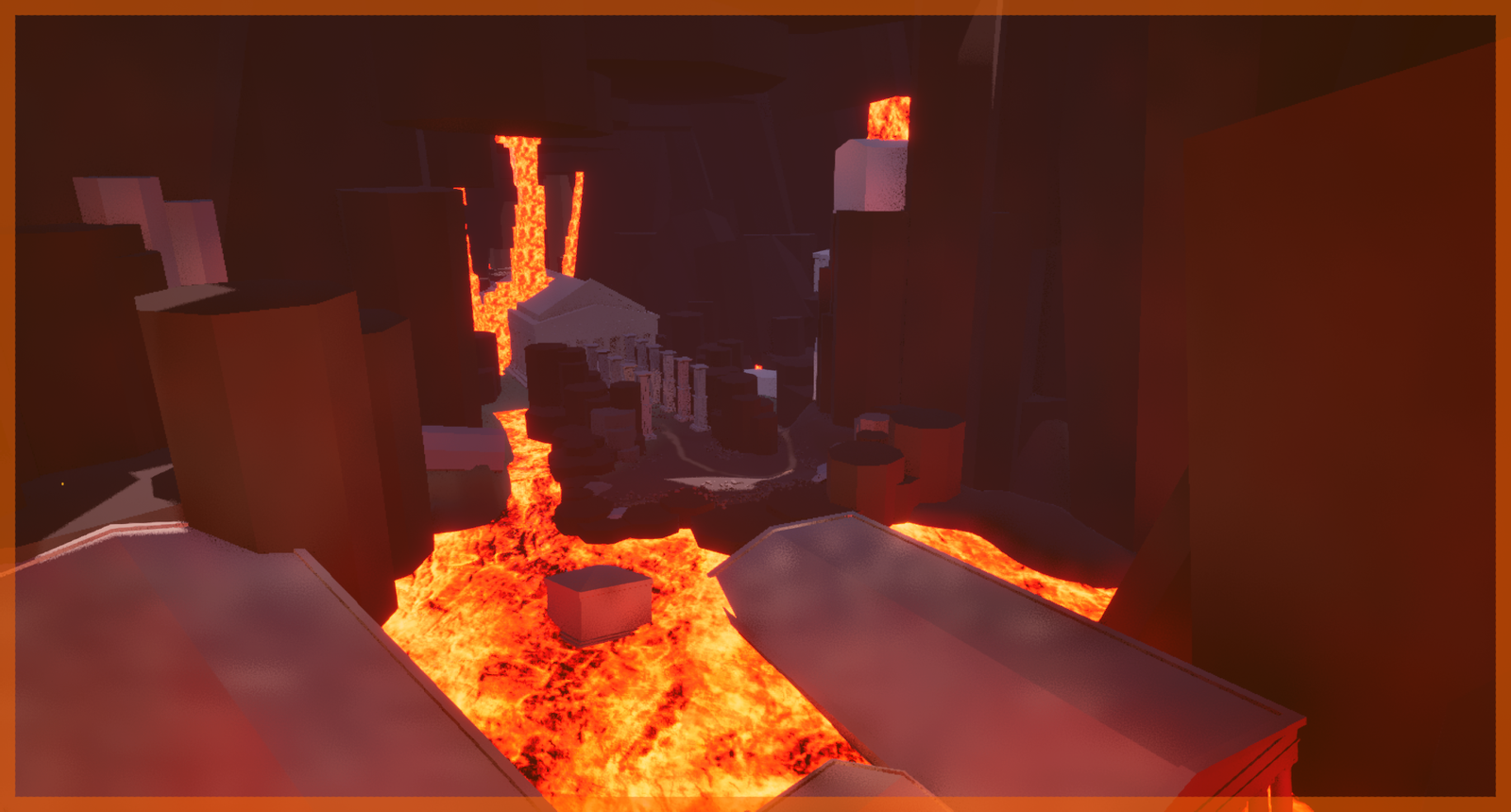
MOUNT ACROPOLIS
The imposing volcano can be seen from the vantage point in the starting area.
It mainly serves as a connection between the overworld and the underworld, but there are secrets to be found inside the volcano before heading underground.
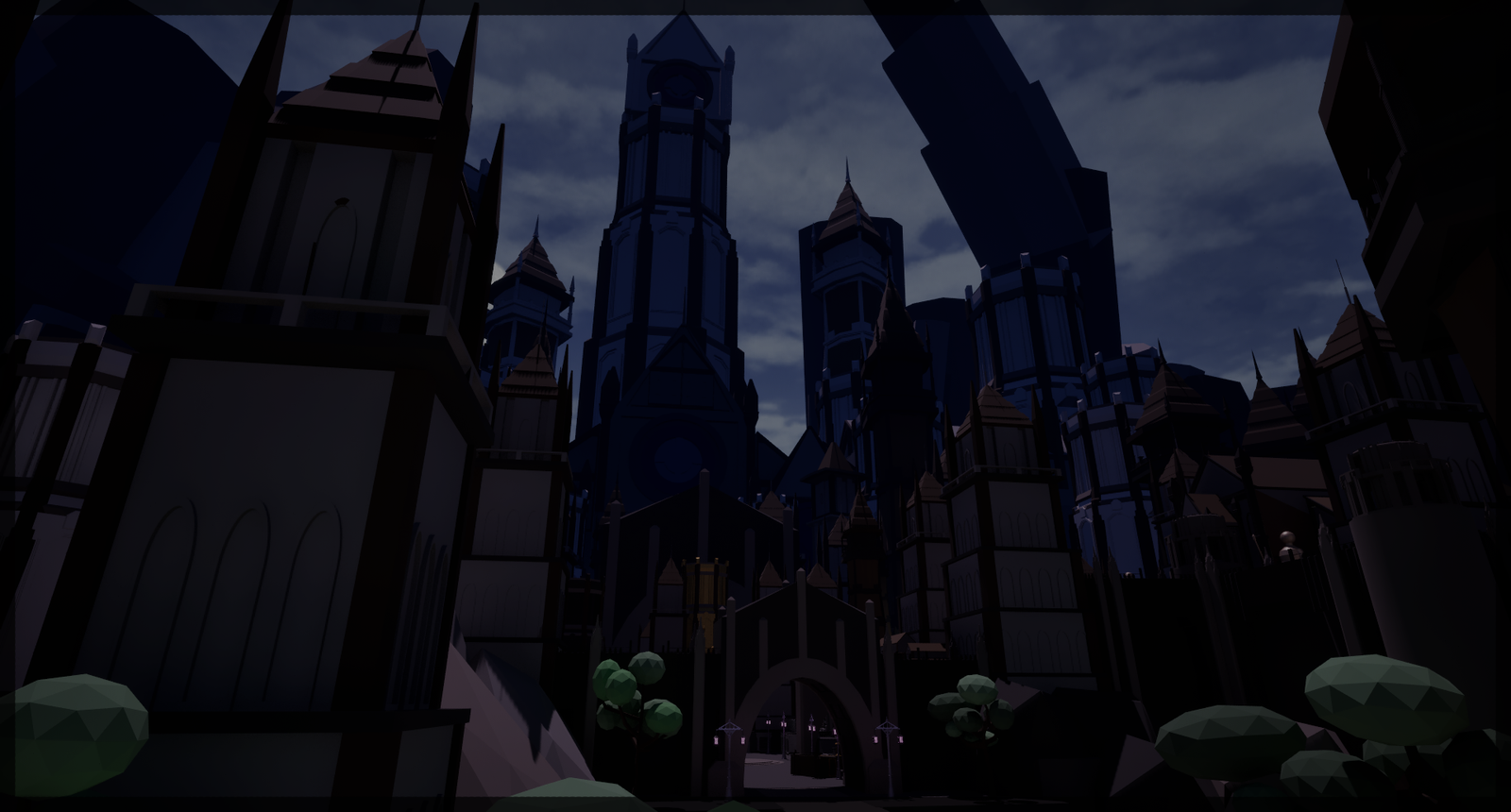
THE CAPITAL
This is the final area the player explores in the overworld.
The player can choose to immediately go to the boss waiting at the end, or explore the city to find hidden rewards and challenging enemies throughout.
THE UNDERWORLD
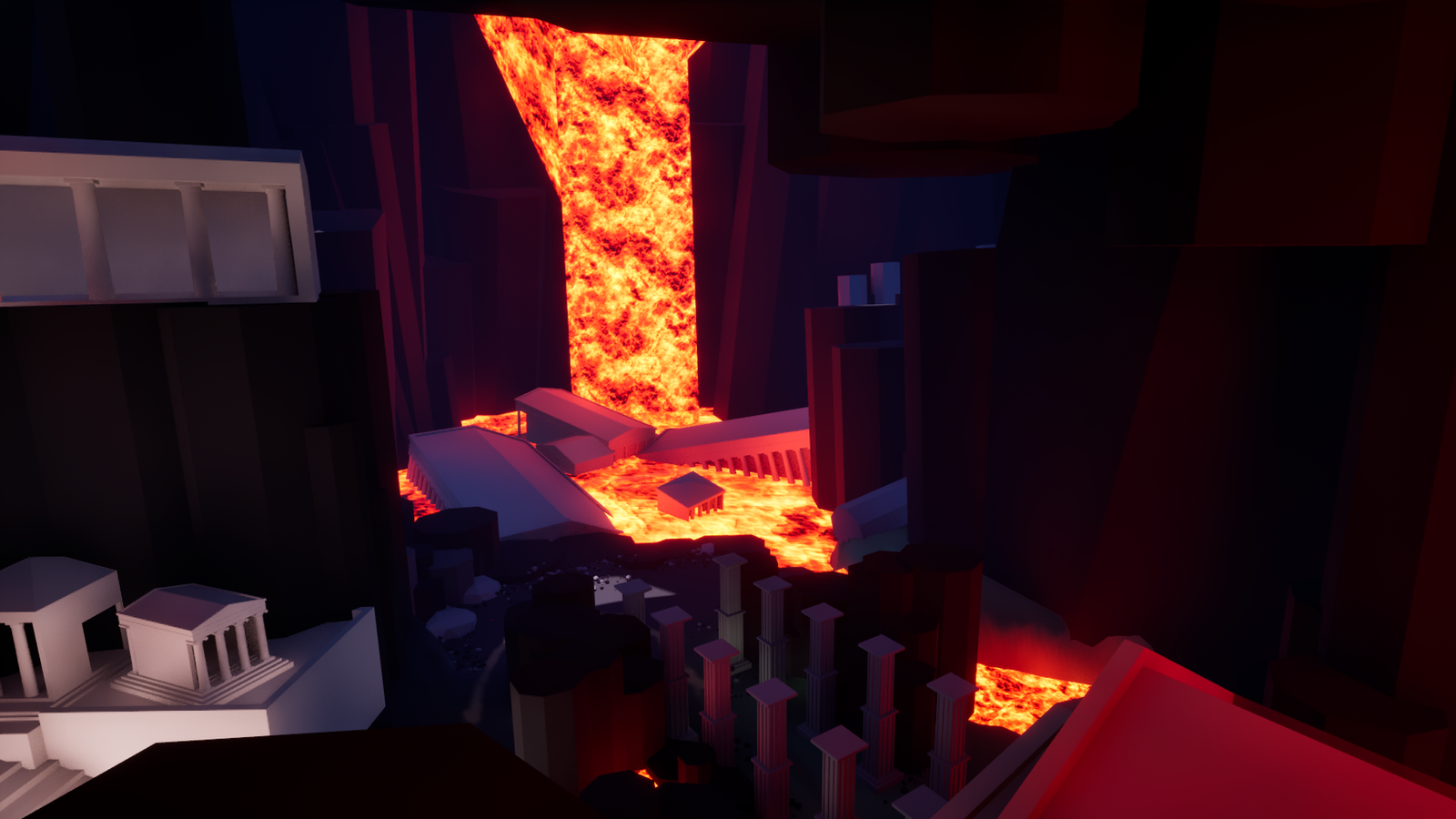
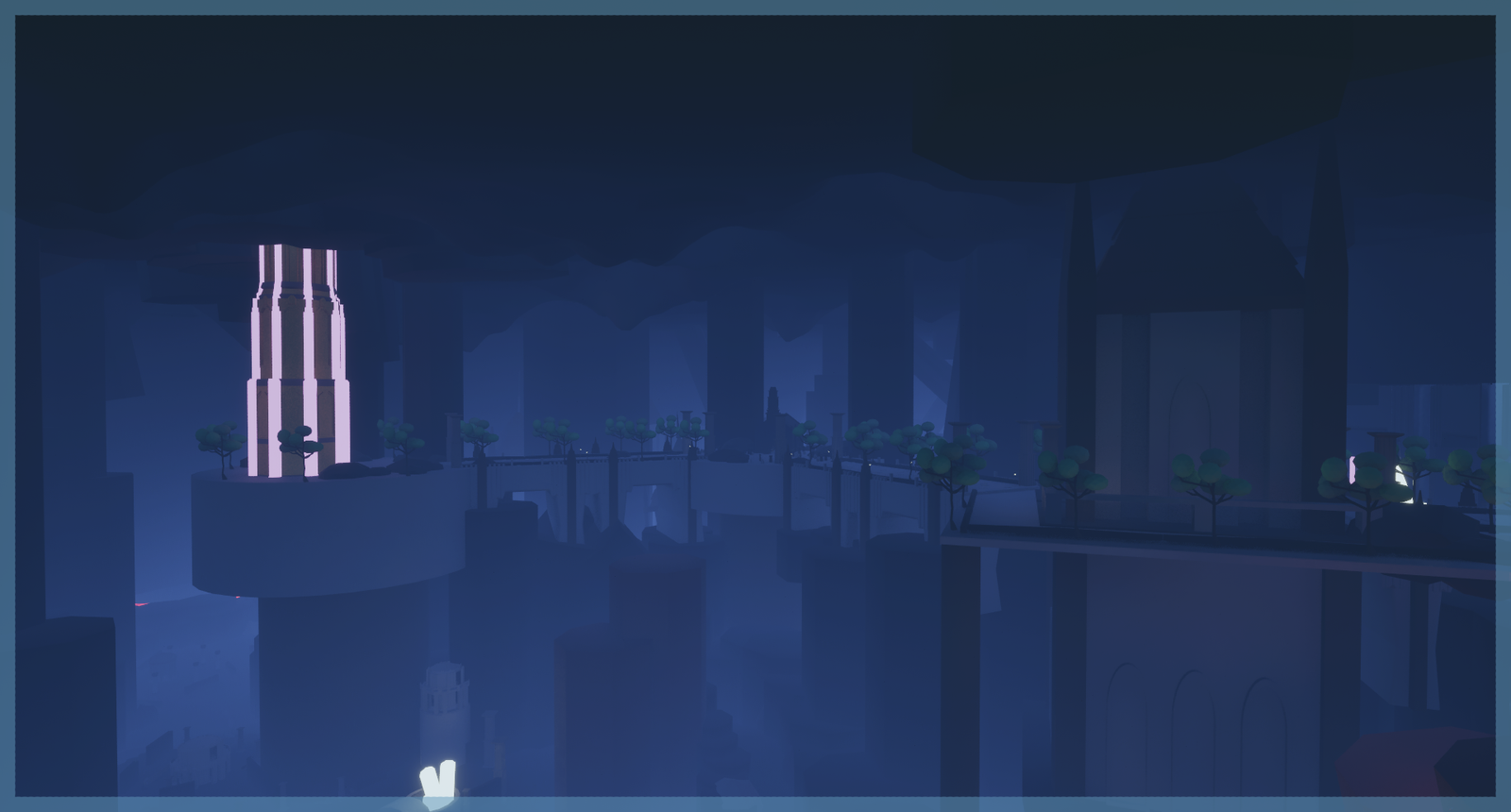
The Depths
The Ancient Passage
THE BIOMES
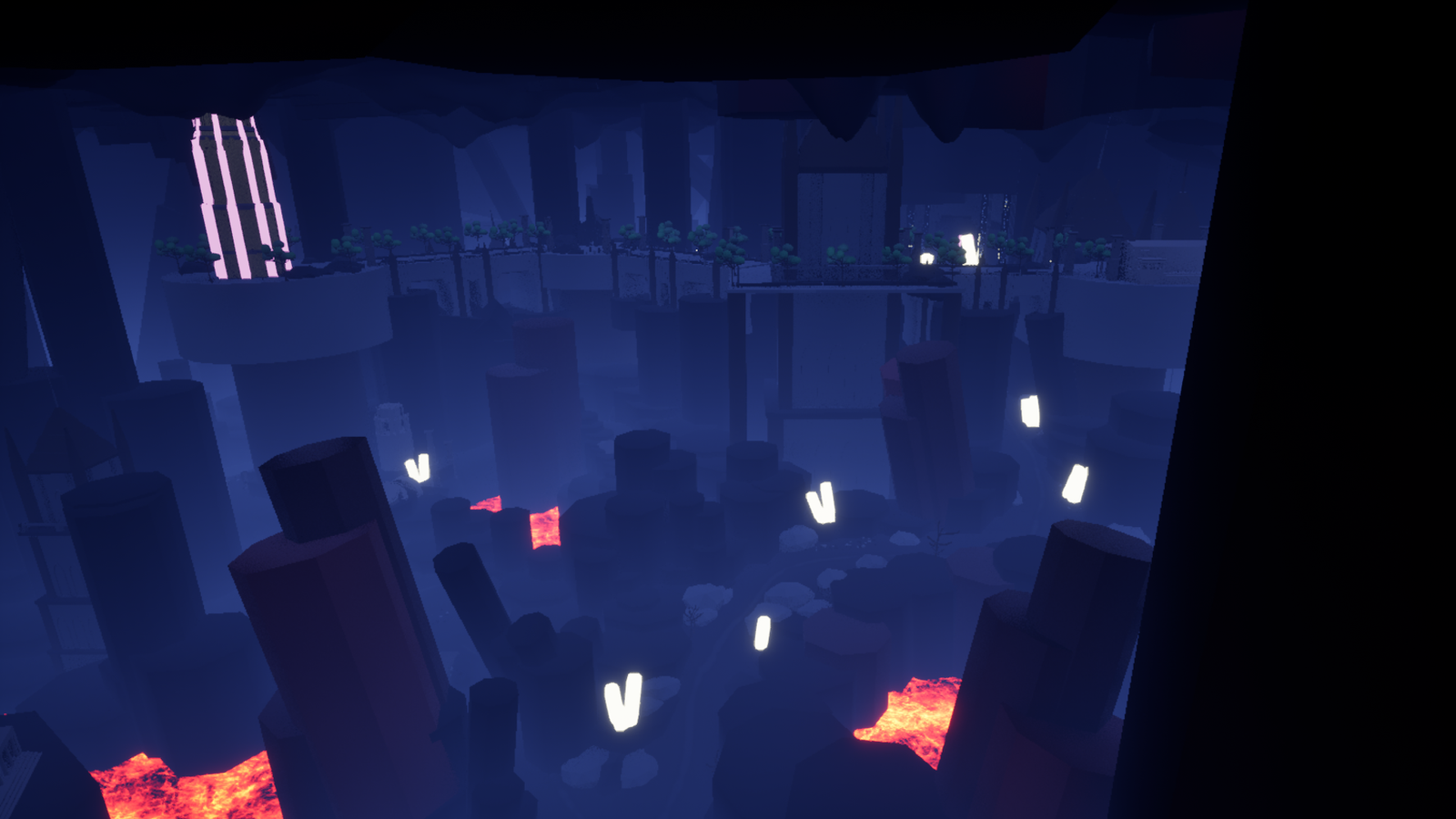
THE DEPTHS
Something Elden Ring does well is how it makes the player feel like whether they go up, down, left or right, there is always something new to be found.
To introduce this feeling of adventure into my level I made the decision to let the player explore a large cavern underground before heading to the Capital.
THE ANCIENT PASSAGE
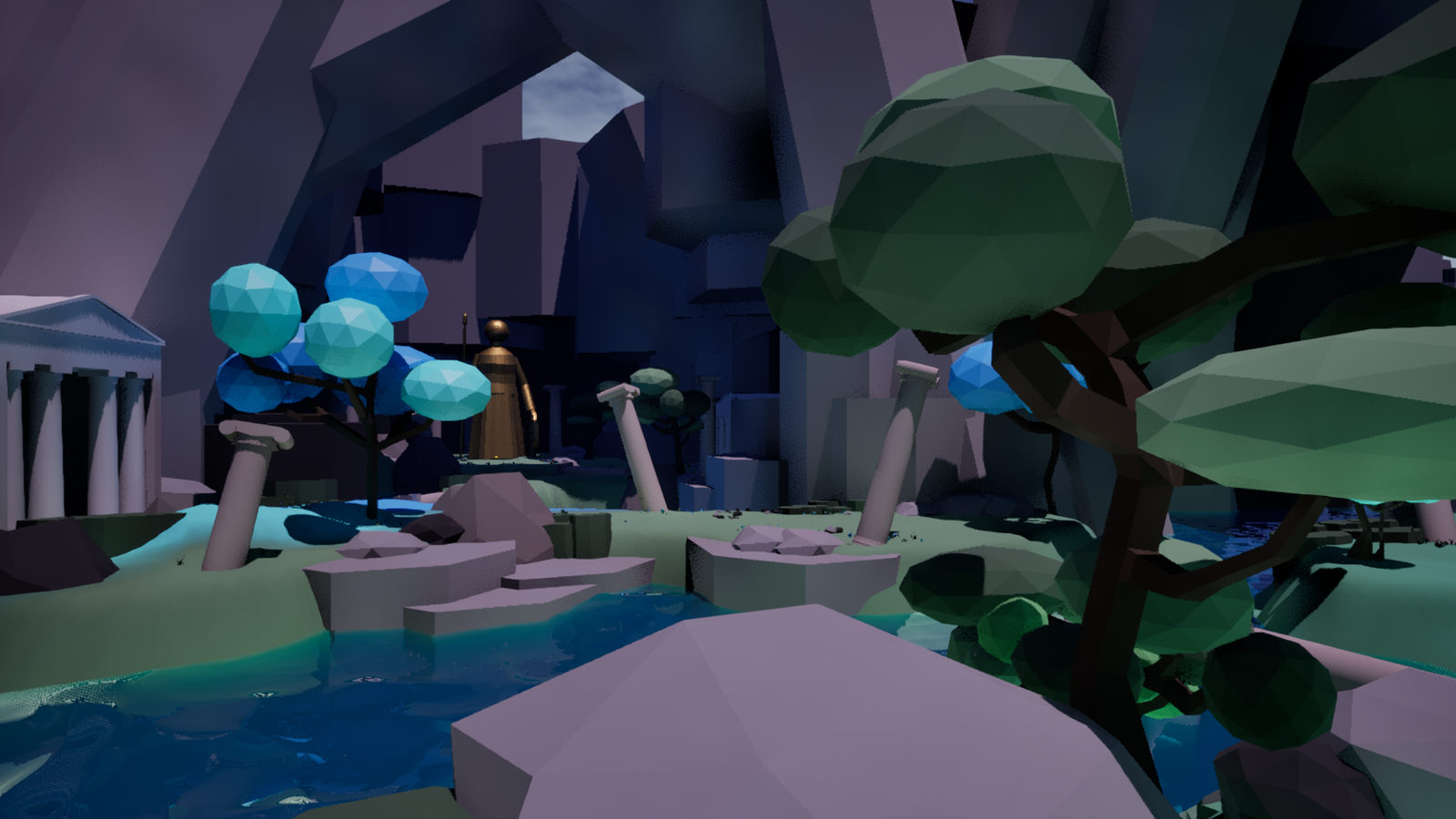
The remnants of an old civilization underground. It can be seen from The Depths but it is inaccessible from there.
Beating the boss in the capital lets the player return to the hub area by way of this area.
Like Mount Acropolis, it mainly serves as a connection between two points but there are also secrets hidden around.
PROCESS & ITERATION
I always begin my projects by coming up with a rough idea of what I want to do and then go into Unreal and block out some very basic shapes. This helps me find a general flow for the level and lets me get a sense of scale while I consider where to place my focal points and points of interest.
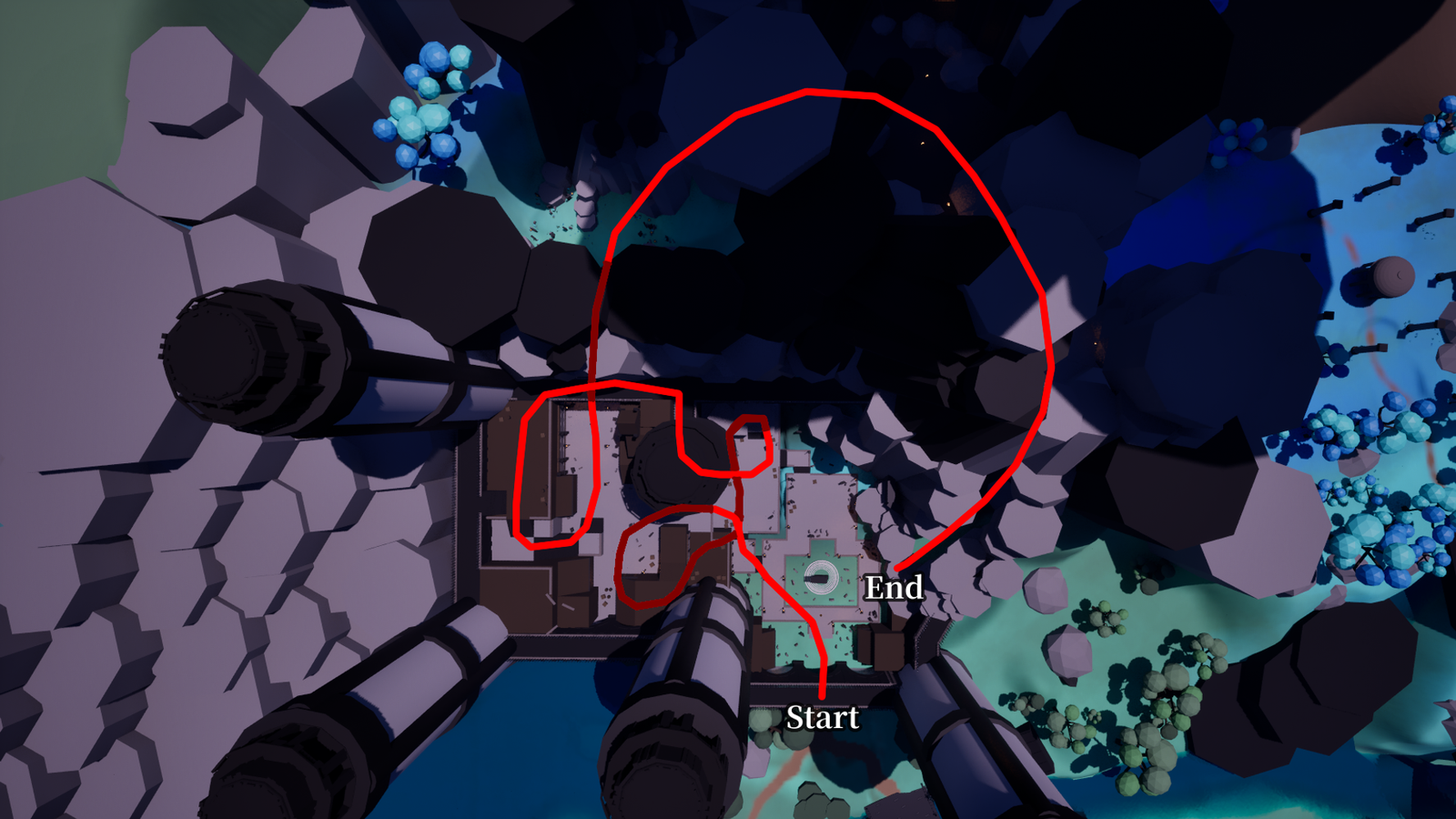
Something I often strive for in my levels is to create that classic feeling of being lost only to turn a corner or open a door and realize you’re back in a place you recognize from earlier, also known as a level loop. I’ve implemented this in various ways both out in the open world and in the areas with more condensed level design such as the fort or The Capital, the entire level even loops back on itself.
The player ends up behind the village at the end of the level
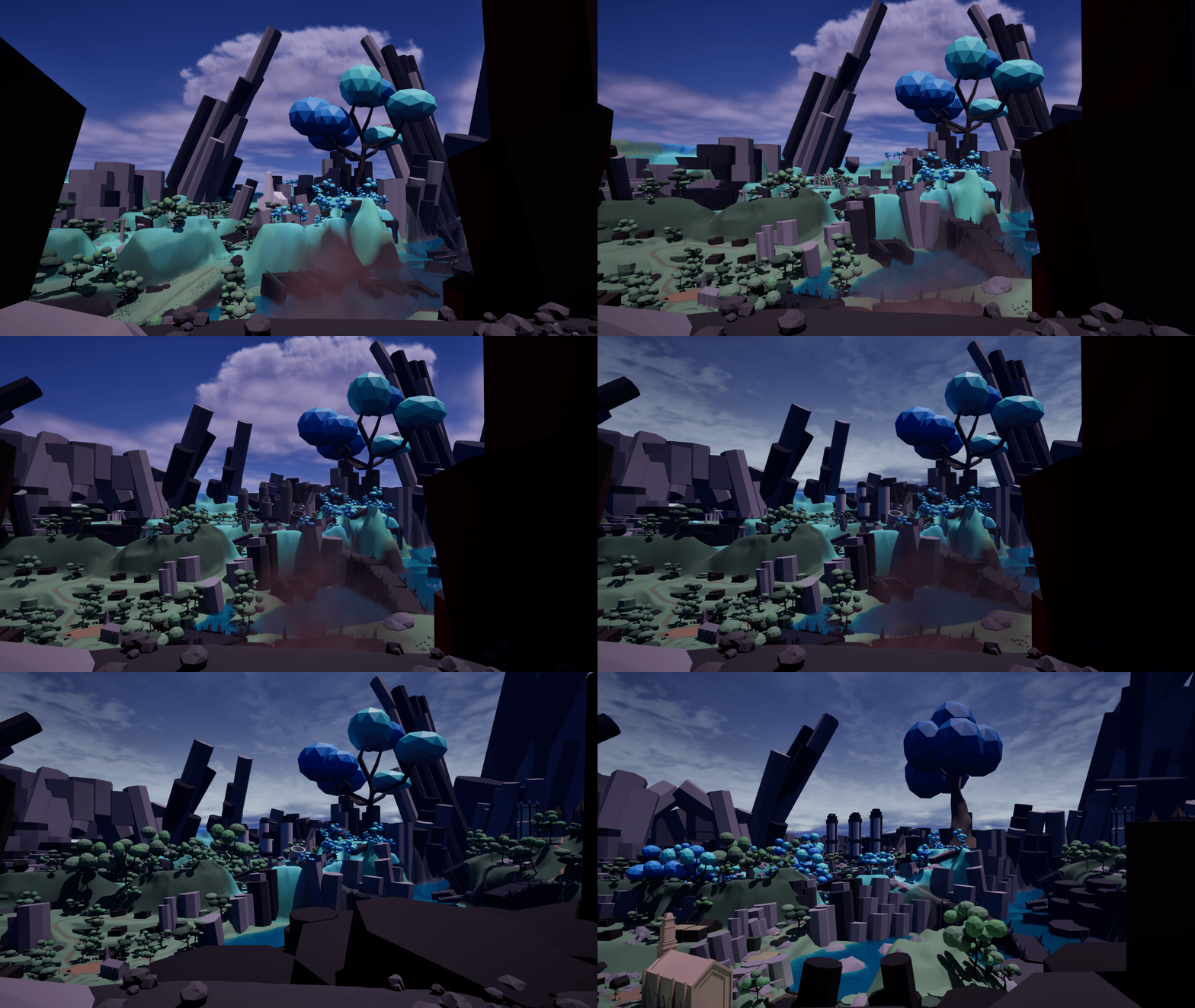
EARLY ITERATIONS
Since I had worked on this project previously I didn’t start completely from scratch. Instead I had clear and concrete starting point and certain objectives to change.
I was already happy with the general shape of the environment after going through a few new iterations in the early stages.
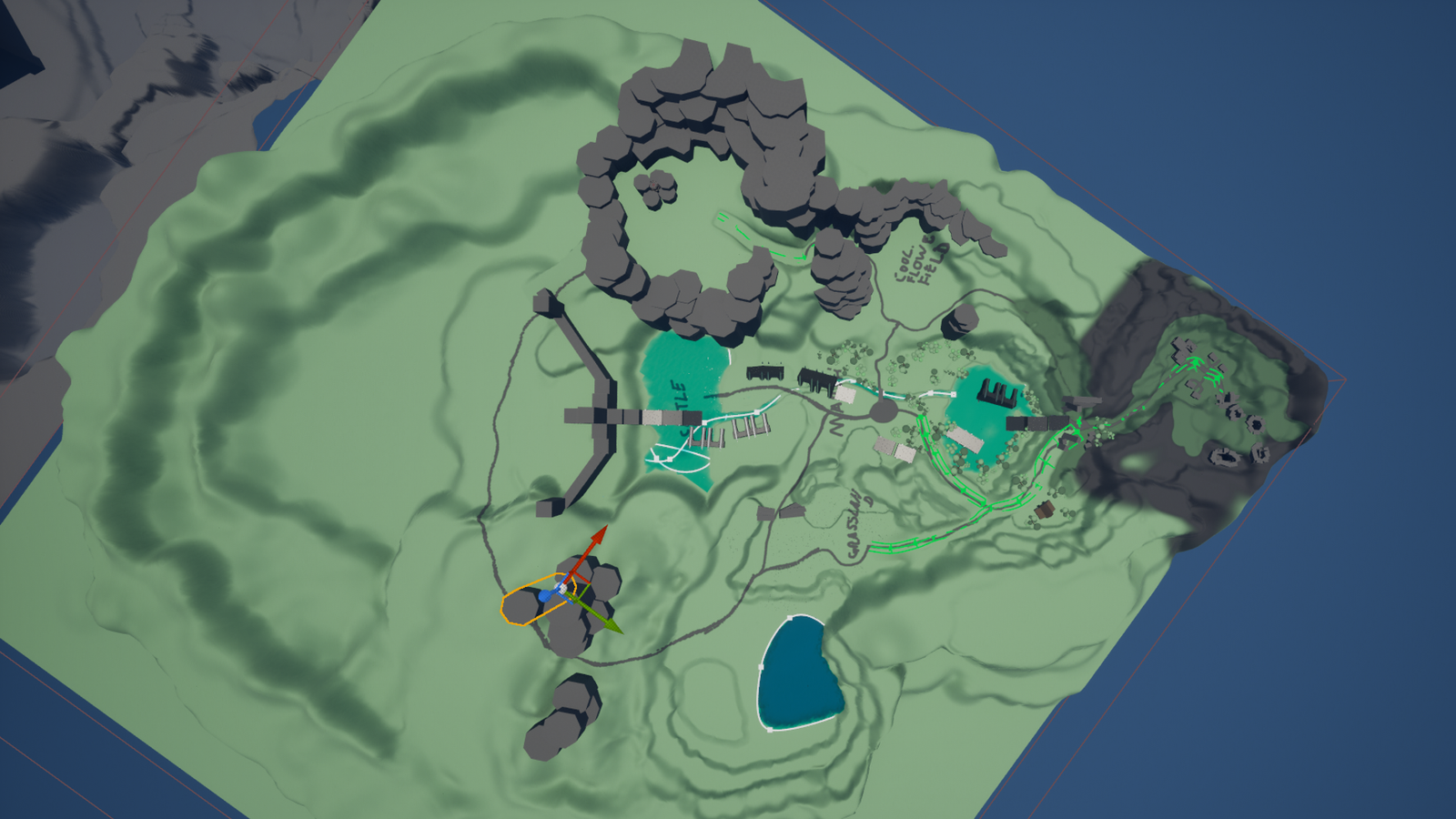
I wanted to create a sense of scale that felt fitting for the style of epic fantasy world I was aiming for. To accomplish this I made a large landscape and worked my way inward until I was satisfied.
Having an environment ready to go saved me a lot of time and let me focus on changing the objectives I had set for myself before reworking this piece.
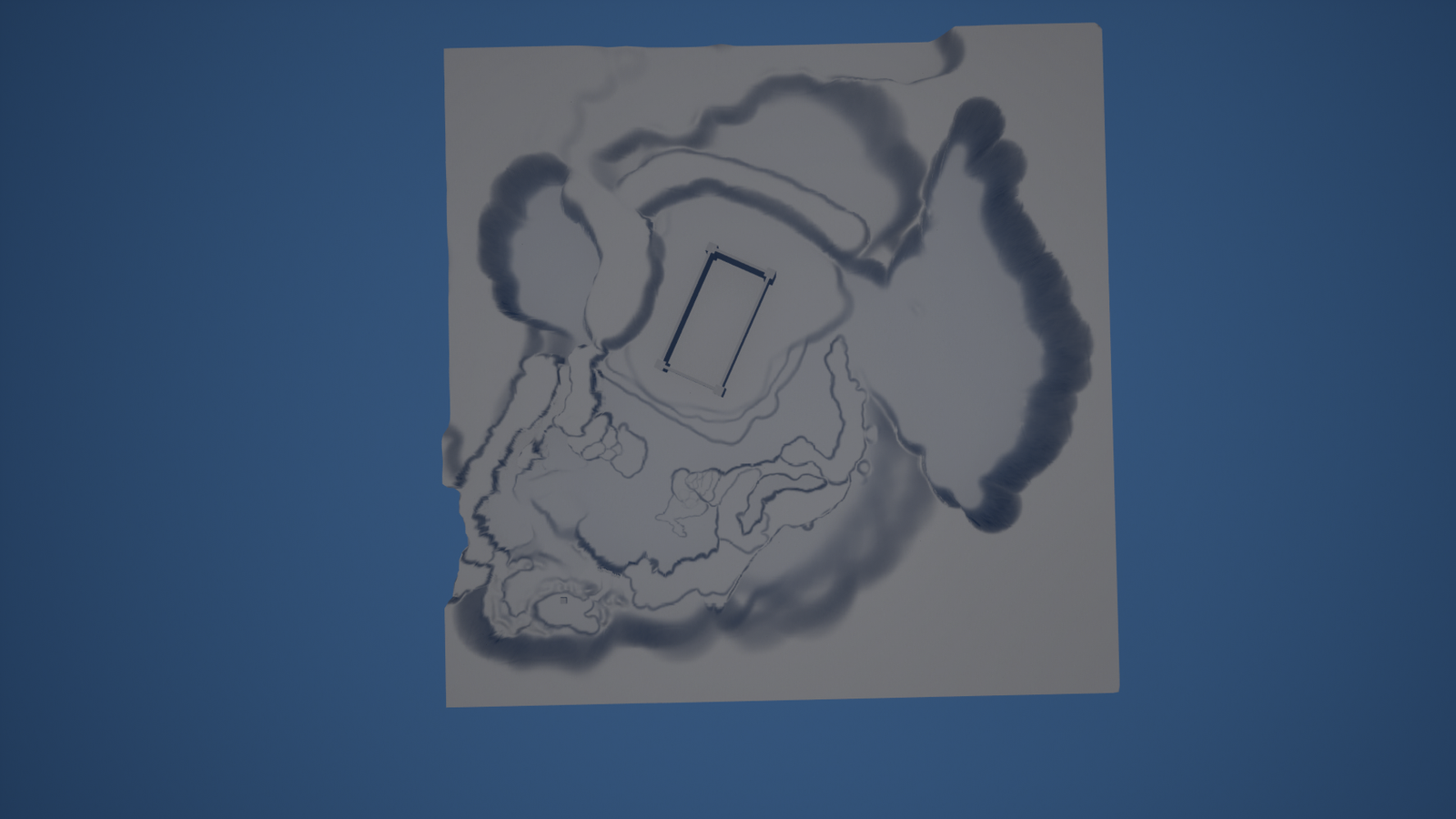
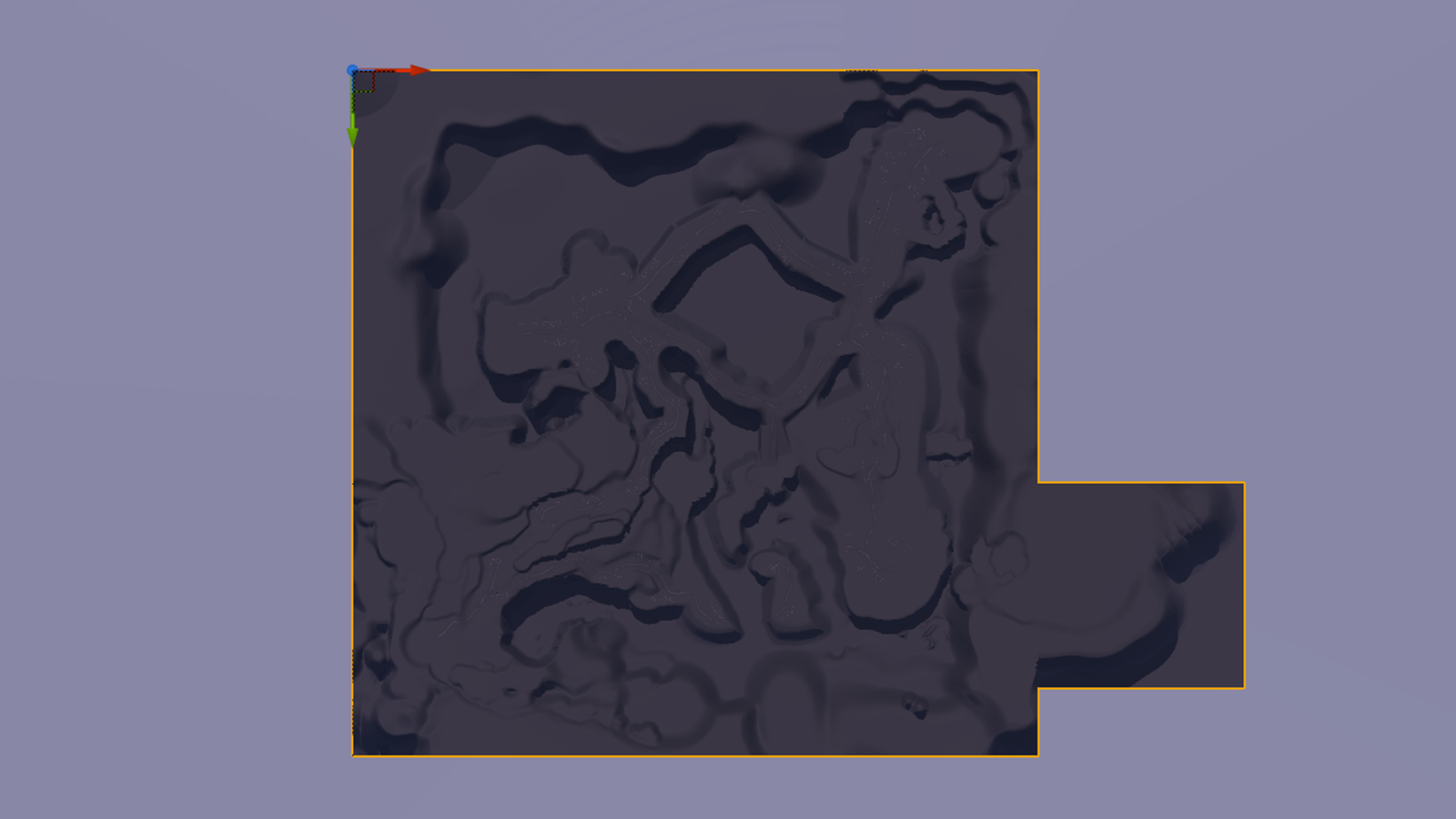
First version of the overworld
First version of the underworld
First version of the starting view
Later version of the overworld
IMPROVEMENTS
One of the major flaws of the old design was how barren the Sapphire Hills area felt. For this reason I decided to update it with a new structure, a fort containing a boss and a weapon upgrade.
I wanted this area to be optional but also feel rewarding to explore and by going through different iterations of it I was able to find a version that felt satisfying to play through and looked aesthetically pleasing.
By giving the player a reward such as this in an area they could have missed they will feel like they spent their time well and to some extent “outsmarted” the level by obtaining a strong weapon in an optional area, even though it is a part of the intended design.
In addition to the fort I also created a variety of points of interest along the way, such as an enemy encampment and a derelict shrine inside a cave.
The purpose of adding these points of interest is not only to add more places for the player to explore, but also to give them a bit of world building through environmental storytelling.
Since I had not yet added items and an inventory system I decided to implement a simple collectible which the player could find in various parts of the level. I did this mainly to give the player a stronger incentive to explore parts of the level that were not on the main path.
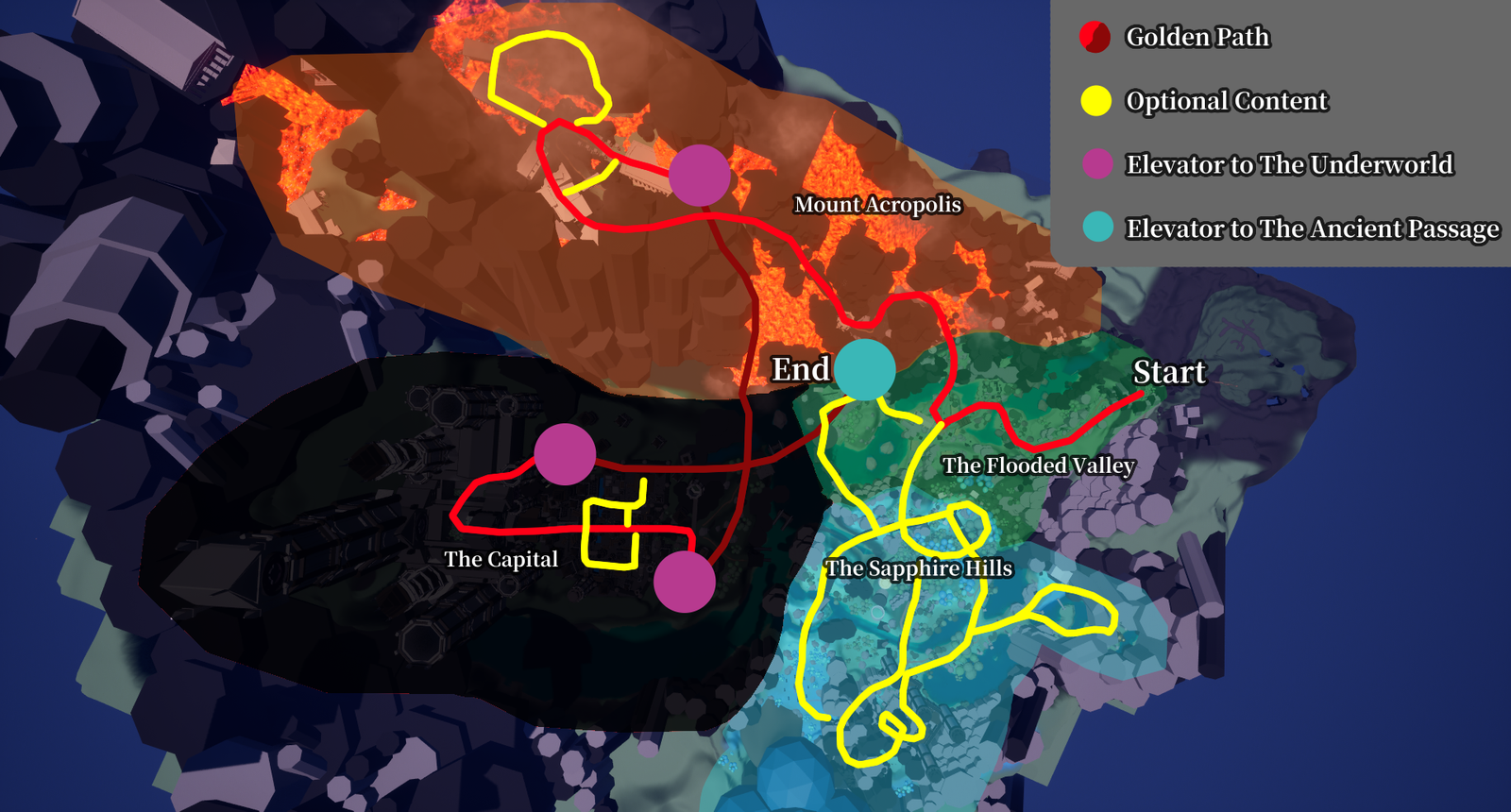
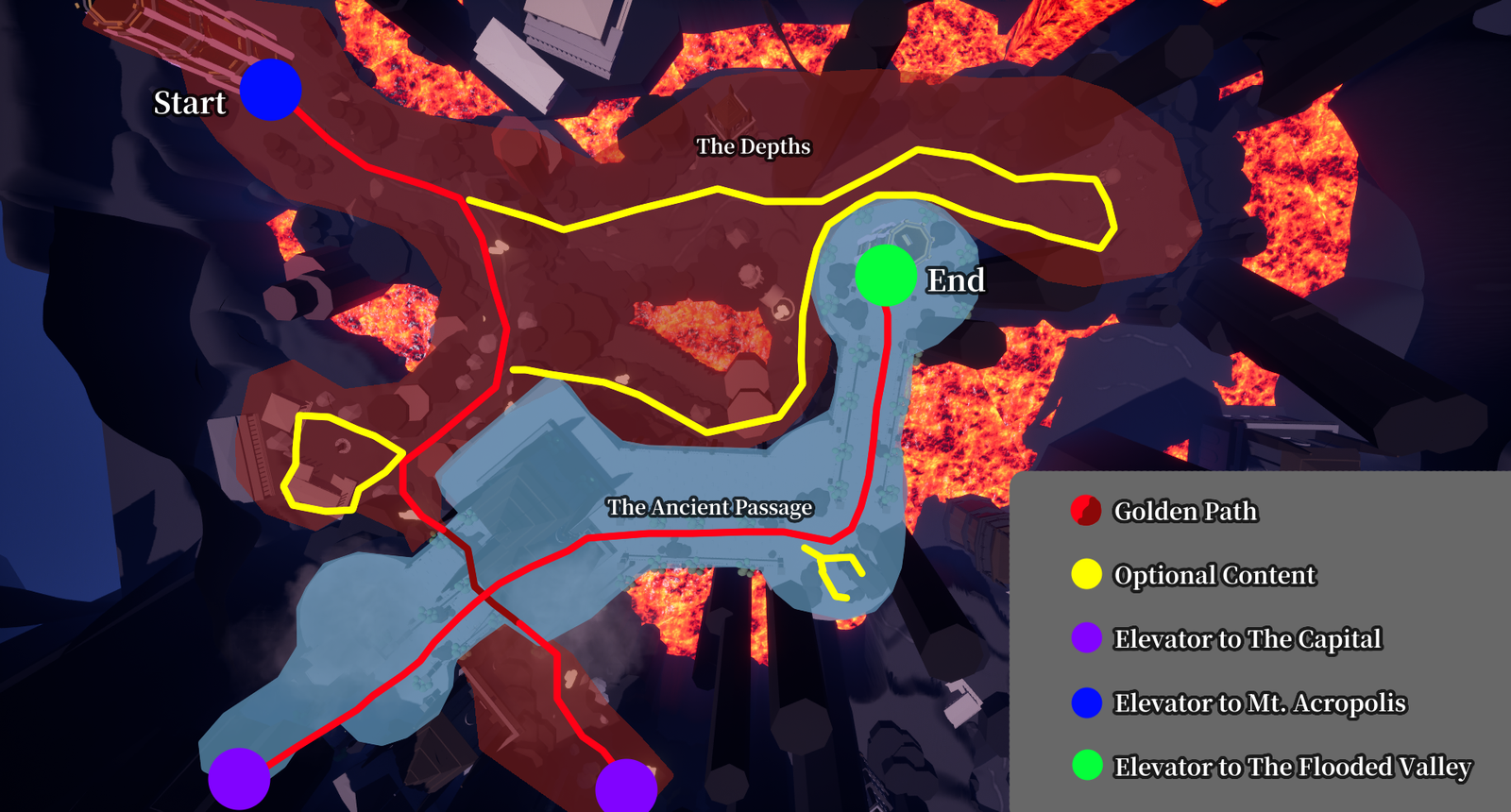
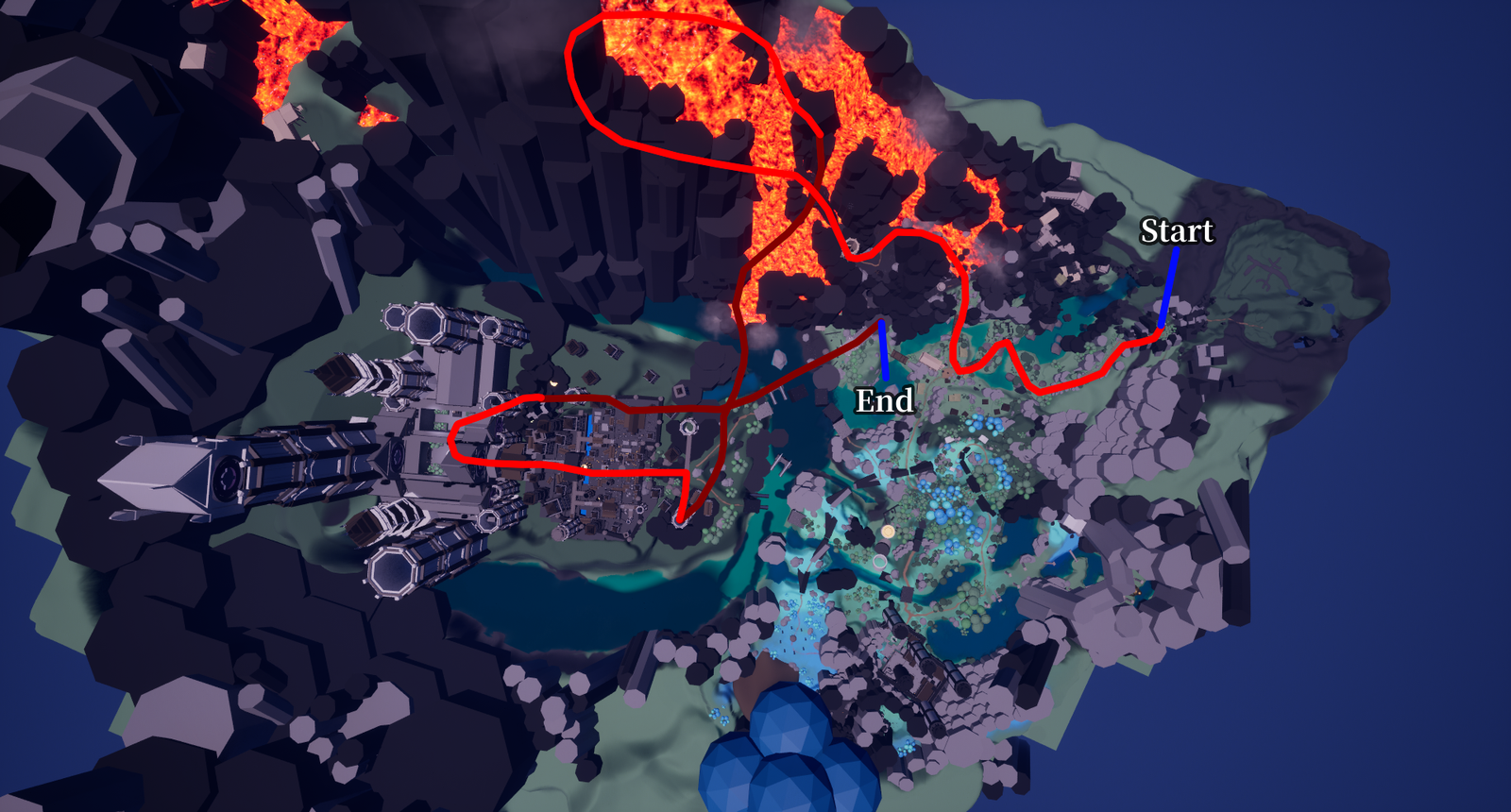
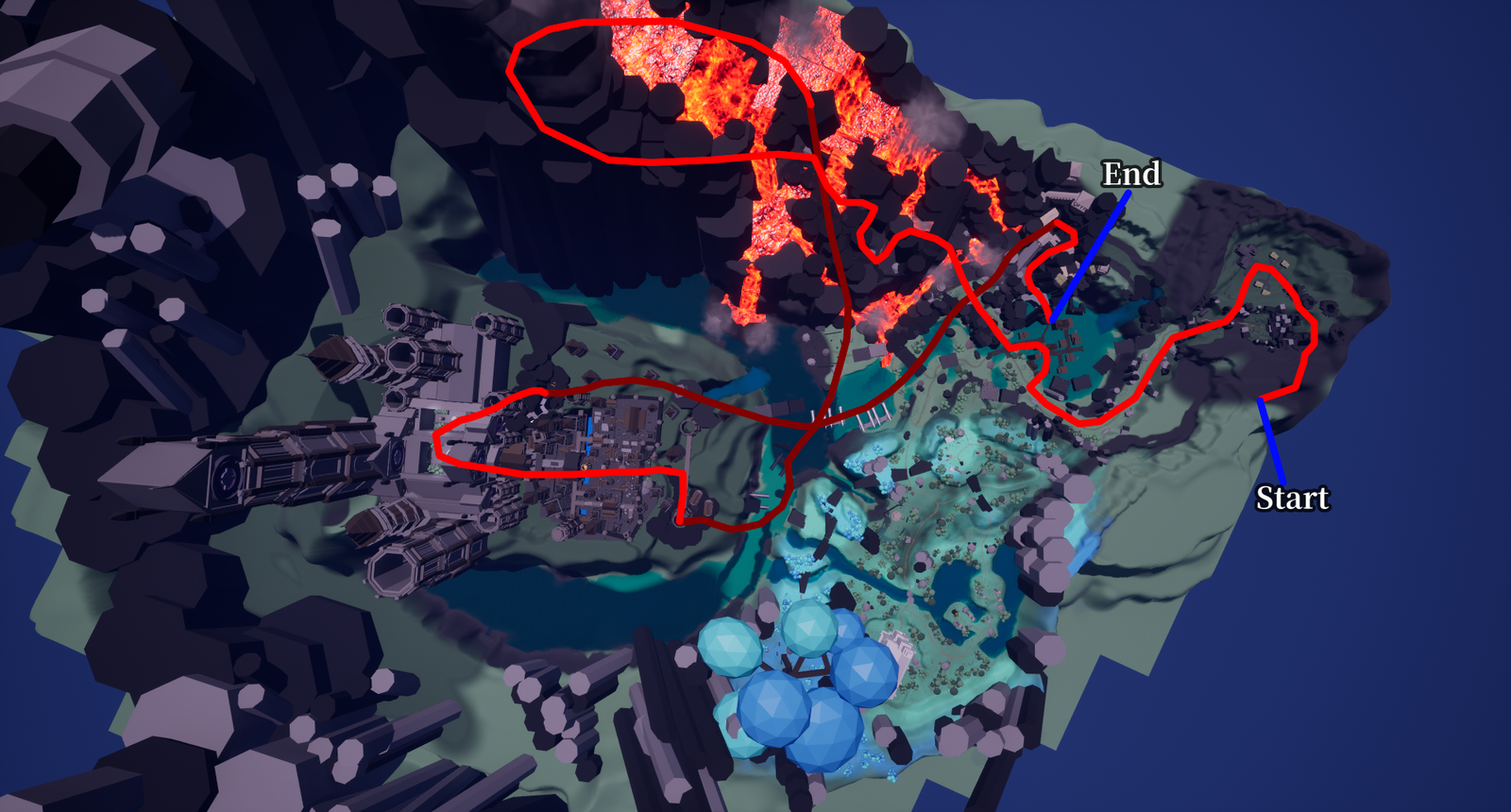
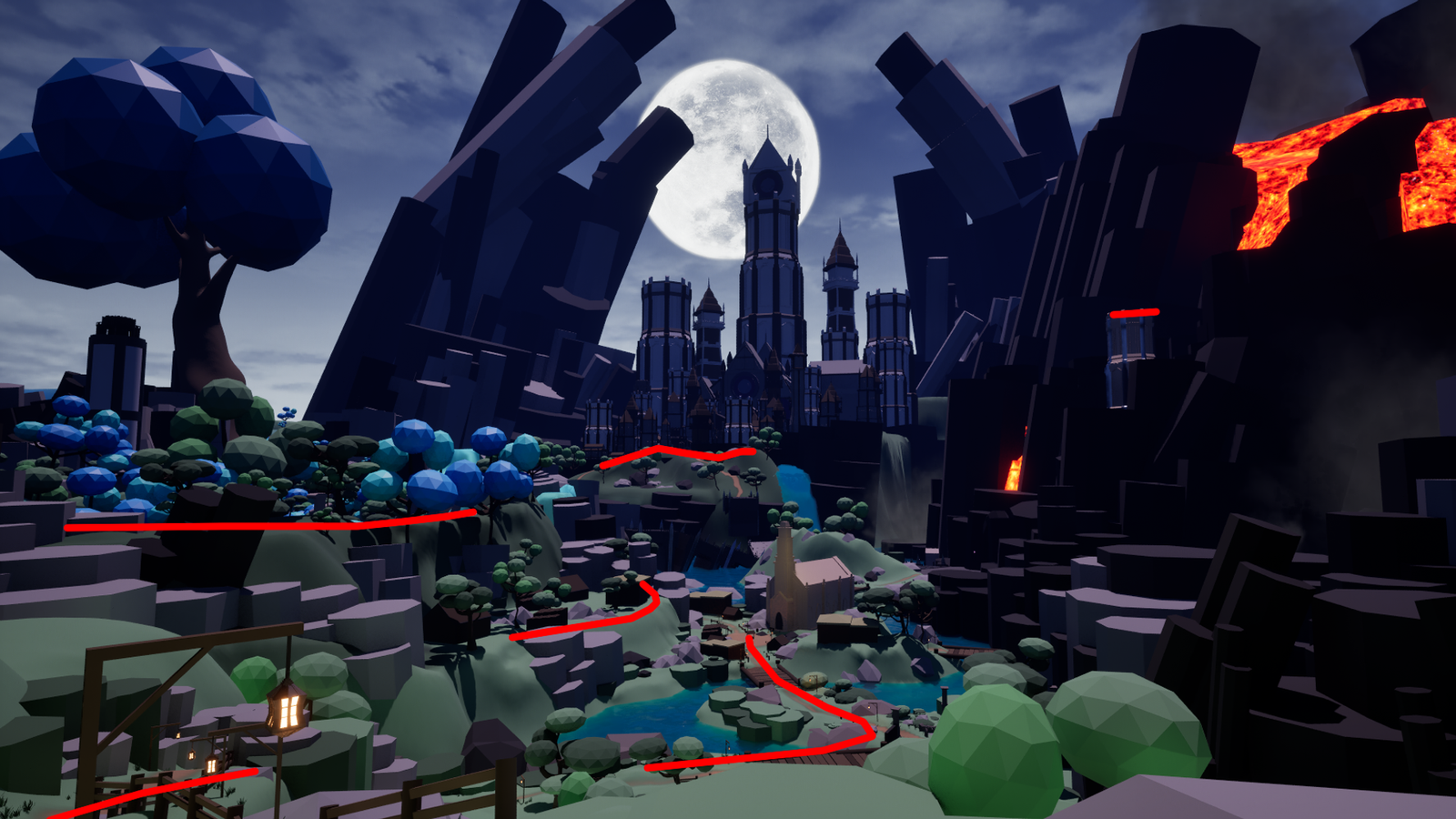
Another part of the level which felt overly lengthy and could be improved upon was the golden path the player needed to traverse in order to beat the level. The player started very far back and had to travel further than necessary to get to the end. I improved on this through various iterations. The final solution was to move the starting point forward and the end closer to the hub area where the experience was intended to end.
I also added many more side areas, such as the fort, minor enemy camps and various points of interest along the main route and on the side paths to constantly refresh the player’s interest in their surroundings. This also made the world less empty and aided in making it feel more real and fun to play through. As an effect of this the length of the golden path became less noticeable, since the player was now constantly entertained with new content.
New golden path
Old golden path
The main thing that was lacking from my previous versions of this level was fun exploration and cool things for the player to find. Many places felt empty and that caused the players to lose interest.
The improvements I made created a final result that felt a lot more polished and fun to play through. It now feels more like the world full of interesting areas and secrets that I intended for it to be from the beginning.
DESIGN TECHNIQUES
VISTAS
The composition and world design is important so I put a lot of work into creating appealing vistas for the player.
These are used both show what is to come and to show where the player has already been.
THE 10 SECOND RULE
To avoid the player losing interest in the experience I made sure that something new happens very often. This could be small things such as a sudden twist in the road or a minor combat encounter. It could also be something more noticeable like a captivating vista or a more intense traversal section.
FUNNEL BEFORE REVEAL
I use this technique in my level to show the player large amounts of information at once after going through an enclosed space. The player is able to linger with the view for a while before continuing on.
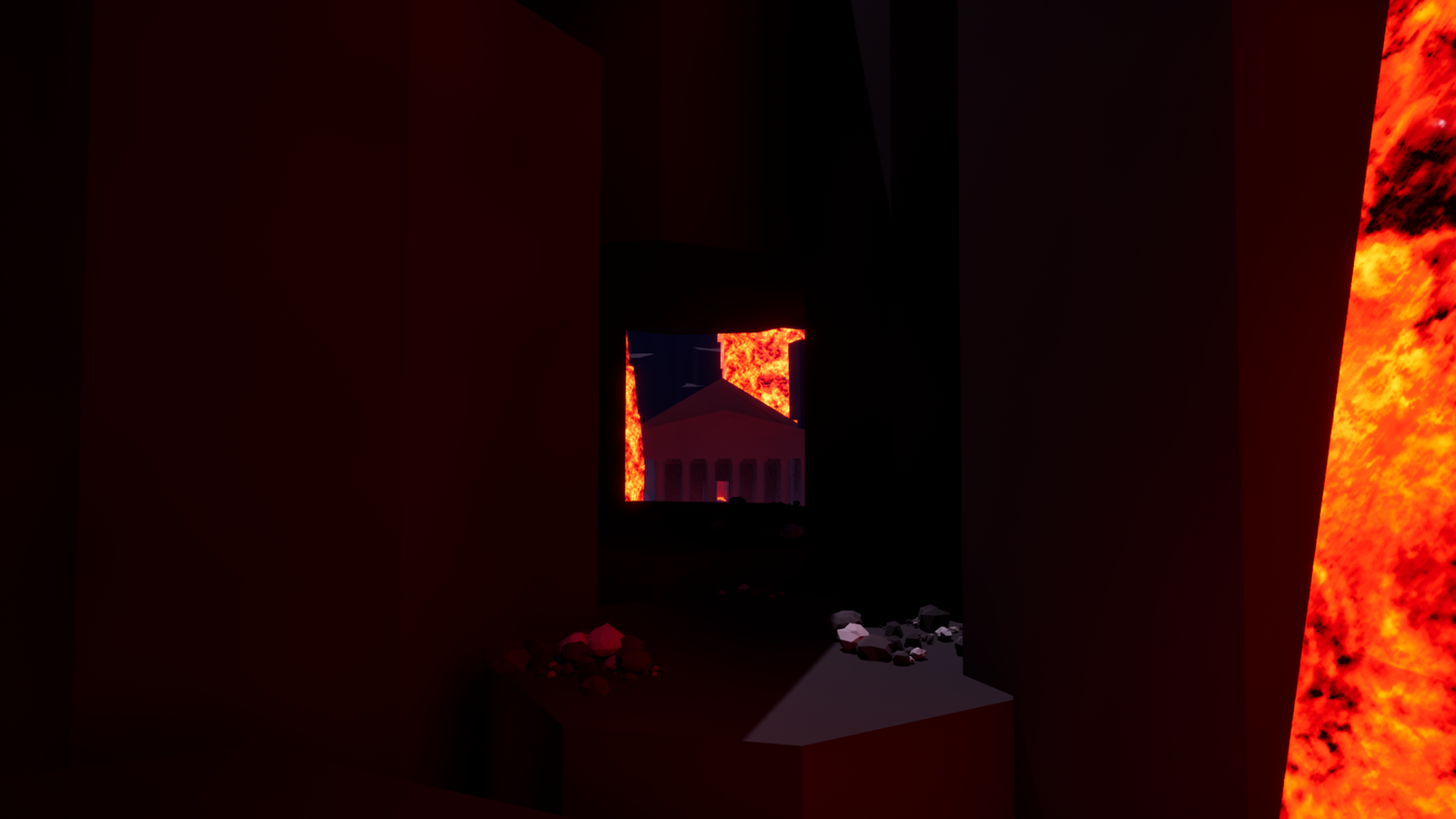
PORTALS
At the entrance to each area I have created different kinds of portals showing off a focused chunk of what is ahead.
In addition they function well as the tight spaces preceding the full reveals.
LEVEL LOOPING
I have made the progression through the world clear and linear. In the cases where I want the player to return to a previous area however, I guide them back through a different path than the one they originally came from.
VERTICALITY
A flat world feels boring and isn’t interesting to explore. I made sure to show the player that there are various levels of elevation in the world that can be reached somehow.
I also chose to leave some areas hidden to surprise the player at a later point.
GUIDING THE PLAYER
When building a level at this scale it’s important to keep the player on the right track, or have a way for them to find their way back if they stray from it. However, the feeling of being a little lost is something that adds to the sense of adventure. For this reason I have made sure to add points of interests to the places the player is likely to stray.
To guide the player I have used a few design techniques in particular and focused on a combination of findability and discoverability.
GOALS
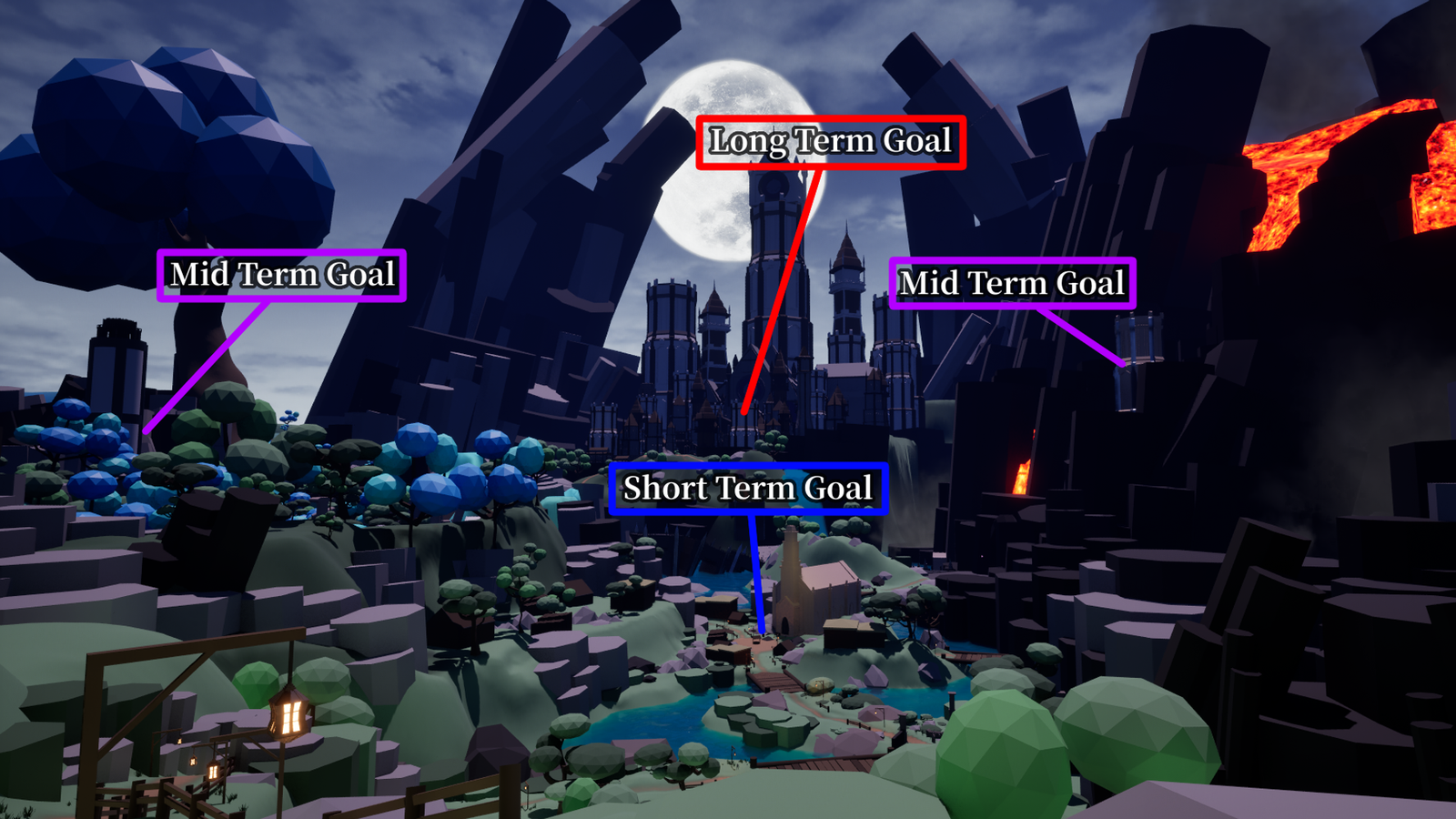
As a result of my focus on composition I am able to set up clear short, mid and long term goals for the player from various different perspectives in the level.
The primary example of this is in the opening vista where the player is introduced to the world. There is a lot to see but it is clear where the player can go immediately and where they must make a longer trek to reach.
DATUM
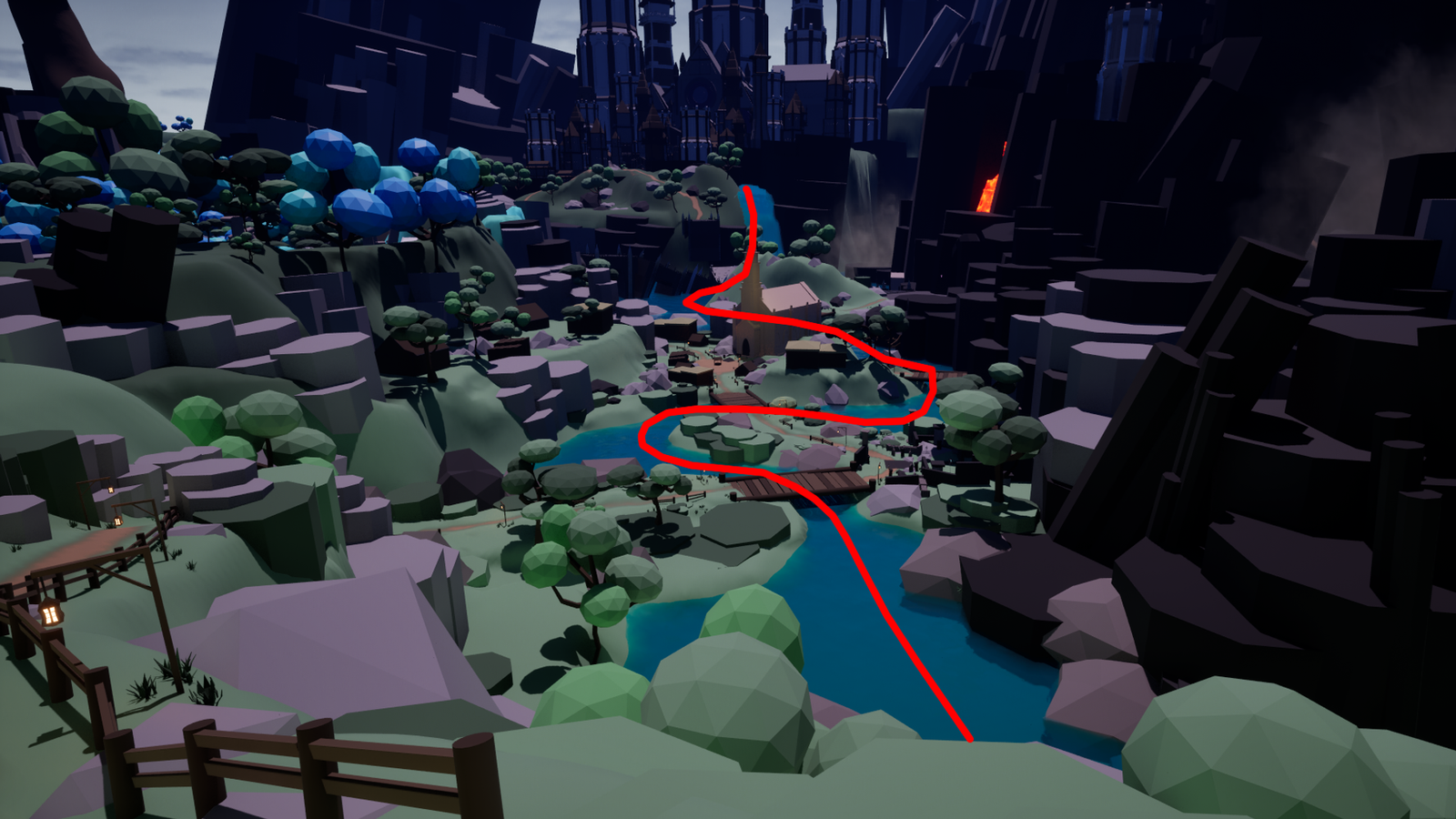
The central river which flows through the middle of the map. The player can see this river right from the starting overview of the map and take mental notes of where various places along it are located.
In the underground section, The Ancient Passage can be seen immediately upon the players descent and acts as a datum in this area.
SIGNPOSTING
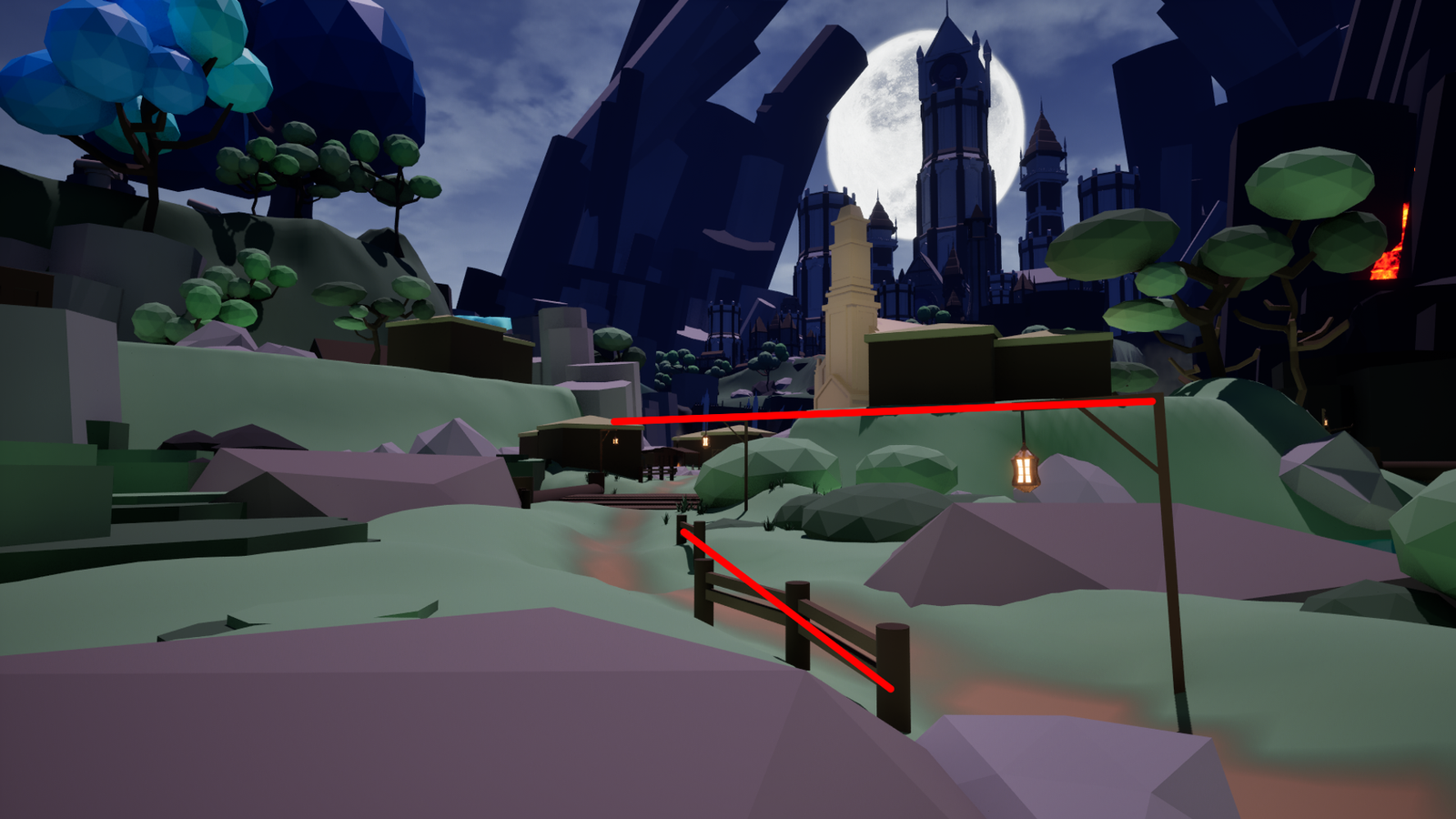
In order to guide the player I have placed lamp posts going to and from the village in the overworld.
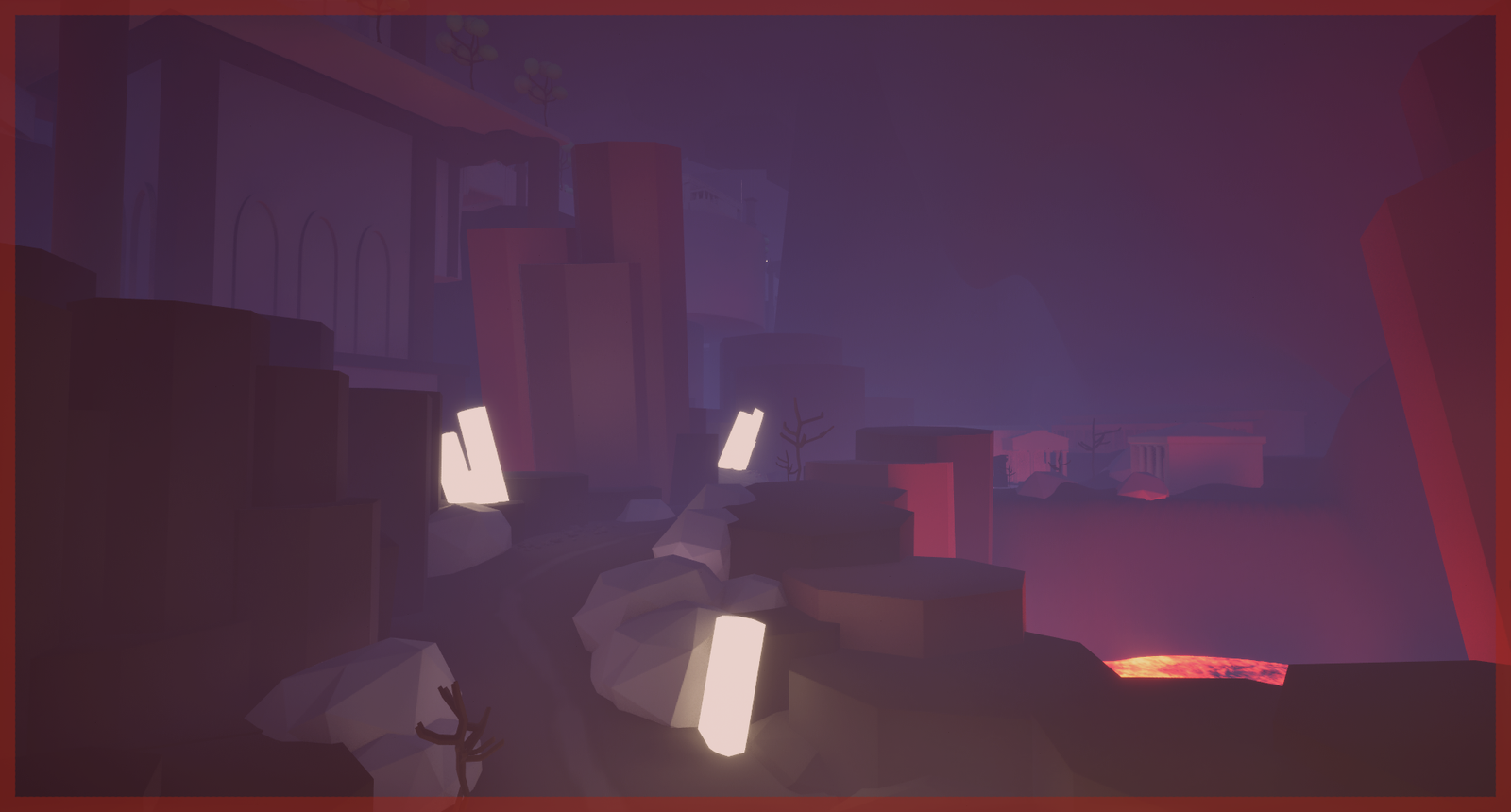
In the underworld I use crystals to show the player the way forward
ENVIRONMENTAL STORYTELLING
Environmental storytelling is used to give the player an idea of what various segments of the areas are supposed to be, or have been in the past, as well as show events that have transpired.
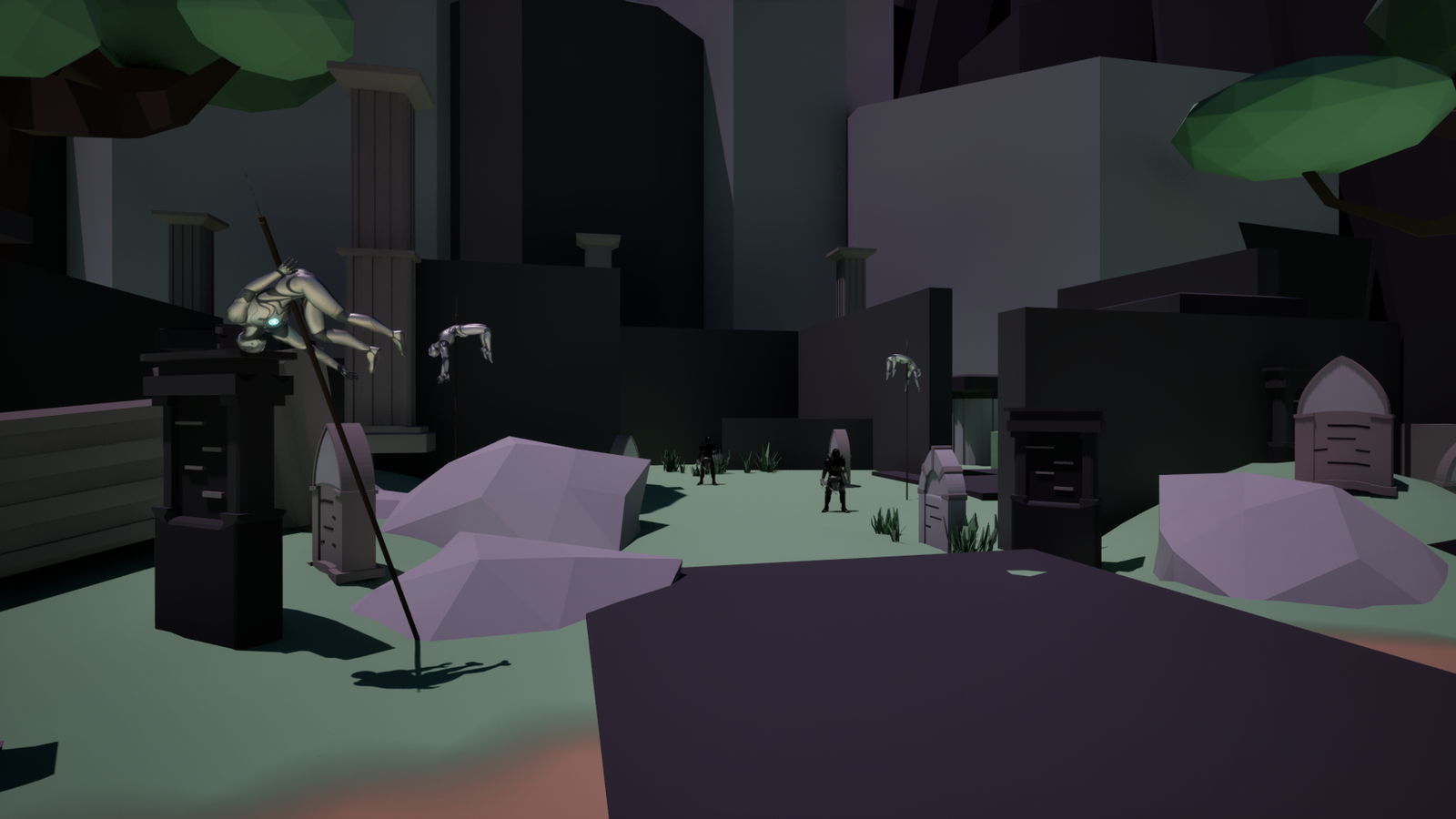
One example of this is that places with enemies are often signified with dead bodies hanging pierced by spears which immediately instills a feeling of hostility in the player and implies that there is a threat present even if the enemies are unseen at first.
This technique is also used to show the player a path that they think they should take, also known as a perceived path, only to show that the path is inaccessible once they make their way there. This keeps the players mind active and they must find a new way to continue forward.
One way this is shown is with a bridge leading to the fort in The Sapphire Hills, it looks accessible from the entrance of the area but once approached the player sees that it is broken and they must find another way to reach their goal.
A bridge leading to the fort can be seen, drawing the player's attention.
The player realizes the bridge is broken and can't be traversed, another path must be found.
CLOSING THOUGHTS
Seeing this project progress from its initial state into the various iterations and finally into the final product has given me a deeper insight into the process of iterating. It has been a real challenge in time management as well as creative problem solving and I feel like I have learned a lot from the experience.
If I had more time there are some points of improvement I would like to make.
I would have liked to focus more on the world building. I feel like the level would have been even more memorable if I properly implemented NPCs and created a more cohesive story using them along with the environmental storytelling.
I also feel like I may have made the world a bit too big. This would have been less of an issue if I had more time, but as things stand now I notice that some areas have gotten more love than others.
All in all I am really satisfied with the result I have achieved and I had a ton of fun working on it!